










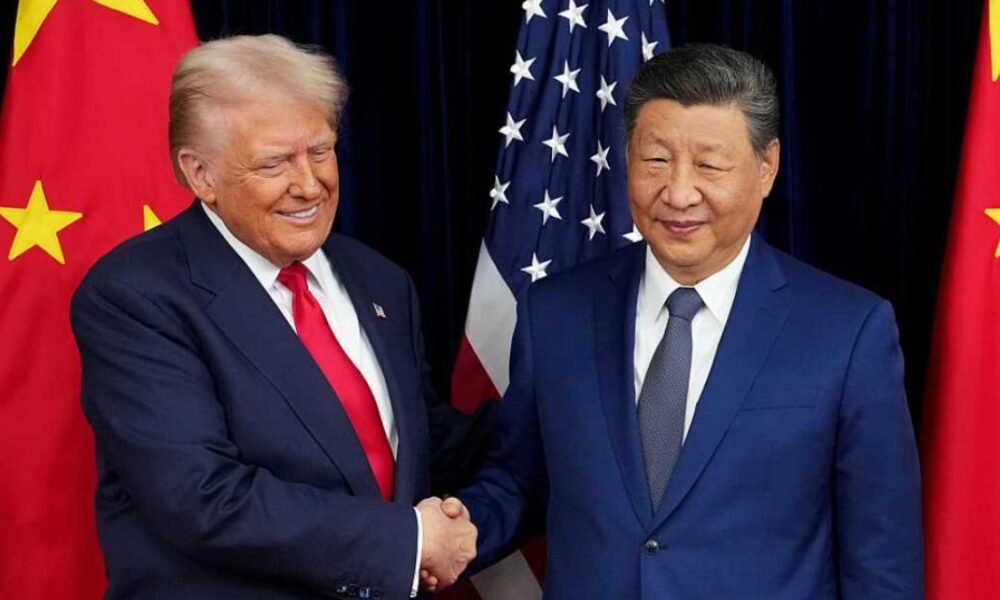
US China trade war 2026 is the core development covered in this report. Below is a sourced breakdown of what is confirmed, what remains uncertain, and why it matters.
Why US China trade war 2026 matters now
This section focuses on the practical implications of US China trade war 2026 for readers following the story — what changed, what is confirmed, and what remains open.
U.S.-China trade policy changed substantially during 2025 and the first half of 2026. The sharp tariff escalation announced in April 2025 did not remain fully in place. Washington and Beijing subsequently negotiated a series of pauses and arrangements, while older U.S. tariffs and technology controls continued.
As of July 29, 2026, the result is not a single “China tariff.” Importers can face several overlapping measures depending on a product’s tariff classification, origin and applicable exclusions. At the same time, controls on advanced semiconductors and related technology operate separately from customs duties.
Key facts as of July 2026
- The United States is maintaining a 10% reciprocal tariff on covered Chinese imports while the heightened reciprocal rate is suspended until November 10, 2026.
- An additional tariff imposed in response to the synthetic-opioid emergency was reduced from 20% to 10% effective November 10, 2025.
- Earlier Section 301 duties remain applicable to many Chinese products. The exact rate depends on the Harmonized Tariff Schedule classification.
- USTR extended 178 existing Section 301 product exclusions until November 10, 2026.
- Duty-free de minimis treatment for covered low-value shipments from China and Hong Kong ended in May 2025.
- Commerce Department export-license rules continue to restrict specified advanced computing products and transactions involving certain China- or Macau-headquartered entities.
How the current tariff structure developed
In April 2025, the administration announced a new reciprocal-tariff system and a higher rate for China. That headline rate was later reduced during negotiations. A May 2025 U.S.-China understanding suspended the heightened reciprocal duty for 90 days and left a 10% reciprocal tariff in effect. The suspension was extended in August.
A further arrangement announced in November 2025 extended the suspension through November 10, 2026. The United States also reduced its China-specific synthetic-opioid duty by 10 percentage points, from 20% to 10%. China made commitments involving chemical-export controls, retaliatory measures and purchases of specified U.S. agricultural products.
Those negotiations did not erase the entire preexisting tariff system. The November presidential action expressly kept the 10% reciprocal duty during the suspension, while the White House said other U.S. measures would remain. Consequently, adding two headline percentages is not a reliable way to calculate the duty on every shipment.
| Policy layer | Status on July 29, 2026 | What it means |
|---|---|---|
| Reciprocal tariff | 10% remains; heightened rate suspended to Nov. 10, 2026 | Applies to covered Chinese goods under the relevant executive orders and tariff schedule provisions. |
| Synthetic-opioid duty | 10% since Nov. 10, 2025 | A separate China-specific duty; previously 20%. |
| Section 301 tariffs | Remain on many tariff lines | Rates vary by product; strategic products may carry higher Section 301 rates. |
| Product exclusions | 178 exclusions extended to Nov. 10, 2026 | An exclusion applies only when the product satisfies its precise tariff and product description. |
| Low-value shipments | China/Hong Kong de minimis treatment ended | Covered shipments no longer become duty-free merely because their value is $800 or less. |
The table is a policy overview, not a customs calculation. Importers must check the current Harmonized Tariff Schedule, Chapter 99 provisions, country of origin and any exclusion language for the specific entry.
Section 301 tariffs still matter
Section 301 duties date to the investigation of China’s practices involving technology transfer, intellectual property and innovation. USTR’s 2024 four-year review retained those actions and raised rates on selected strategic products.
Examples include a 100% Section 301 rate for covered electric vehicles beginning in 2024, a 50% rate for covered solar cells beginning in 2024 and a 50% rate for covered semiconductors beginning in 2025. USTR also raised duties on specified polysilicon and wafer tariff lines to 50% in 2025. These rates concern defined tariff classifications, not every product loosely described as an EV, solar product or semiconductor.
Permanent magnets were among the products scheduled for a Section 301 increase in 2026. Businesses should verify the current tariff schedule rather than relying on an announcement made before the entry date. The applicable duty may also include ordinary most-favored-nation duties and other trade remedies.
Trade negotiations did not end the dispute
The November 2025 arrangement addressed several immediate points of friction. According to the White House, China agreed to suspend retaliatory tariffs announced after March 4, 2025, take specified steps involving fentanyl-precursor chemicals and make agricultural-purchase commitments. USTR extended current Section 301 exclusions, and responsive actions in its maritime, logistics and shipbuilding investigation were suspended for one year.
In May 2026, the governments announced a U.S.-China Board of Trade for discussions concerning non-sensitive goods and a Board of Investment for investment issues. USTR then requested public comments on products that might be considered in future negotiations. These institutions provide a negotiating channel; they do not themselves repeal existing tariffs.
Technology controls are a separate policy track
Tariffs affect the cost of importing goods. Export controls determine whether specified U.S.-origin goods, software or technology may be exported, reexported or transferred. A lower tariff therefore does not imply that a restricted semiconductor shipment is authorized.
Commerce Department guidance issued in May 2026 states that a license continues to be required for covered advanced-computing items destined for entities headquartered in Country Group D:5, which includes China, or Macau, including entities elsewhere whose ultimate parent is headquartered there. BIS clarified that the requirement covers specified 3A090 and 4A090 items and related classifications.
Commerce has also moved from a general presumption of denial to case-by-case review for license applications involving Nvidia H200, AMD MI325X and similar chips when stated security conditions are met. Case-by-case review is not blanket permission to export. Exporters still must classify the item, screen all parties, assess end use and obtain any required license.
What official trade data show
Census Bureau data show that the United States exported about $106.0 billion in goods to China and imported about $308.7 billion in 2025, producing a goods deficit of approximately $202.7 billion on the bureau’s nominal, unadjusted country table. The deficit was substantially smaller than in 2024, but the figures alone do not identify how much of the change came from tariffs, inventory timing, demand, rerouting or other factors.
A smaller bilateral deficit also does not prove that production returned to the United States. Imports can shift to third countries, and suppliers in those countries may still use Chinese components. Origin rules, substantial transformation and anti-circumvention requirements therefore matter when supply chains move.
Practical implications for businesses and consumers
- Importers of record owe the tariff to U.S. Customs and Border Protection. Contracts determine whether the importer, supplier or customer ultimately bears the economic cost.
- Businesses should classify goods at the tariff-line level and retain support for origin, valuation and any claimed exclusion.
- A supplier’s move outside China does not automatically change origin. Manufacturing performed in the new country must satisfy applicable origin rules.
- Purchase agreements should state responsibility for duty changes, customs records and export-control licenses.
- Consumers may see tariffs reflected through higher prices, smaller discounts, changed product mixes or lower business margins. The effect differs by product and market competition.
- Companies handling advanced chips or production equipment should conduct export-control analysis independently from customs analysis.
Frequently asked questions
Is there one tariff rate for all Chinese imports?
No. A shipment may be affected by ordinary duties, the reciprocal tariff, the synthetic-opioid duty, Section 301 duties or another measure. Exclusions and product-specific provisions may change the result.
Did the 2025 agreement remove Trump’s China tariffs?
No. It suspended the heightened reciprocal rate, left a 10% reciprocal tariff in effect and reduced one separate duty. Earlier Section 301 tariffs continued on covered products.
Are low-value packages from China still duty-free?
Not under the former China/Hong Kong de minimis treatment, which ended in May 2025. The collection method and amount depend on current customs rules and how the shipment enters the country.
When could the current policy change again?
The suspension of the heightened reciprocal rate is scheduled to last until November 10, 2026, unless modified earlier or extended. Section 301 reviews, exclusions, negotiations and export-control rules can follow separate schedules.
Primary sources
Related reading: IMF Cuts 2026 Global Growth Forecast to 3%
Related Topic Express coverage
- Brazil Takes New U.S. Tariffs to the WTO: What Consultations Mean
- Trump AI Controls China: A Cautious New Stance Emerges