









Perseverance Mars asteroid impacts is the core development covered in this report. Below is a sourced breakdown of what is confirmed, what remains uncertain, and why it matters.
Why Perseverance Mars asteroid impacts matters now
This section focuses on the practical implications of Perseverance Mars asteroid impacts for readers following the story — what changed, what is confirmed, and what remains open.
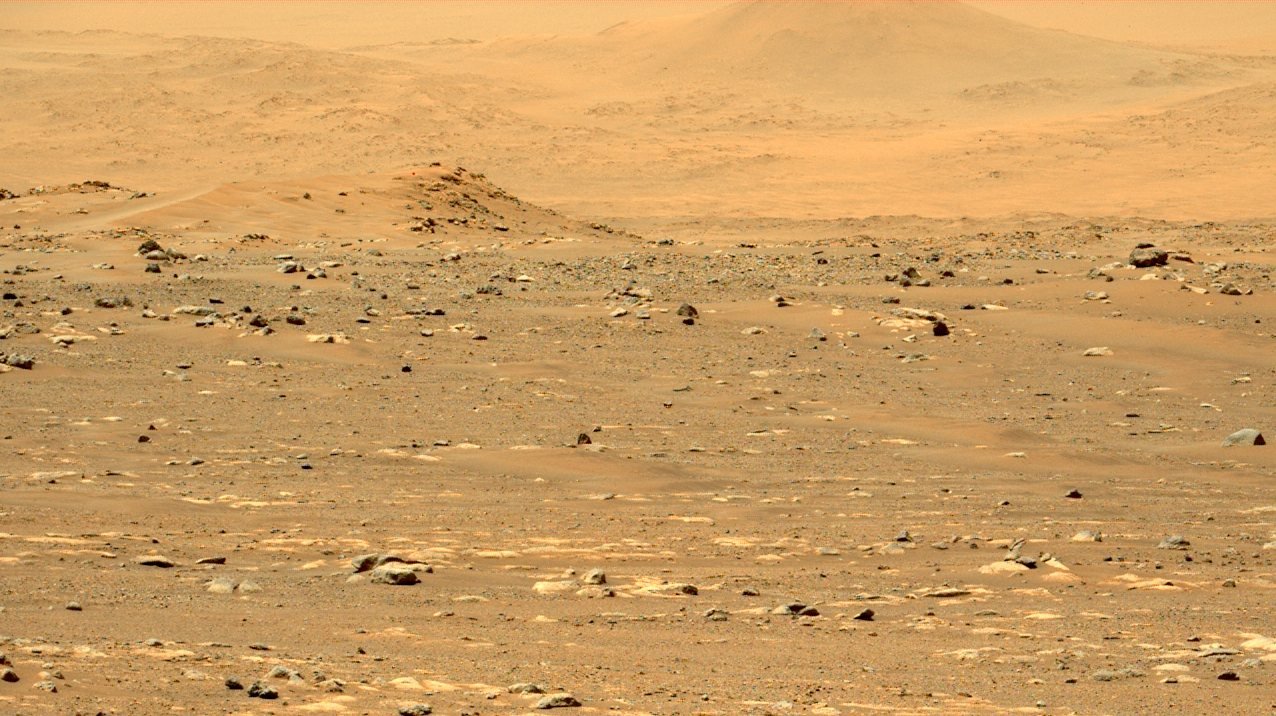
NASA’s Perseverance rover has read a nearly four-billion-year-old “weather report” written in stone. On the rim of Jezero Crater, the mission team identified a roughly 245-foot-thick (75-meter-thick) sequence of layered bedrock—nicknamed the Broom Point member—that appears to have been built by repeated asteroid impacts rather than by ordinary volcanic or sedimentary processes alone.
The findings, published in the Journal of Geophysical Research: Planets and summarized by NASA’s Jet Propulsion Laboratory in mid-July 2026, place Perseverance among the first Mars rovers to examine terrain that likely predates Jezero Crater itself. Scientists estimate the Broom Point rocks are more than 3.9 billion years old, dating to one of the solar system’s most violent chapters.
What Perseverance saw at Broom Point
After climbing Jezero’s western rim in late 2024, Perseverance turned its instruments on the surrounding highlands. At Broom Point, data revealed six distinct rock types. Among them are breccias—rocks made of angular fragments—interleaved with fine-grained layers of pulverized rock dust. Fragments inside the breccias show gas-bubble cavities, a sign they were once molten.
Tiny, dark, glassy beads scattered through the layers proved especially telling. Volcanoes can make similar droplets, but rarely in such abundance. Impact events, by contrast, can loft molten rock that cools into glass as it falls back to the surface. Some of the largest beads rival the sizes of glass spherules produced by Earth’s Chicxulub impact—the asteroid strike linked to the end-Cretaceous mass extinction.
“The different rock layers are a record of variable-sized impacts occurring at different distances from where this rock sequence was accumulating,” said Alex Jones of Imperial College London, lead author of the study, in NASA’s release. Debris from both distant megaimpacts and nearby smaller strikes appears to have piled up in the same stack.
Why Mars still holds Earth’s missing early history
On Earth, plate tectonics has largely destroyed or rearranged the crust from the first half-billion years after the planet formed. Mars lacks that recycling engine. Ancient crust can remain near the surface for eons, giving rover teams a chance to sample a geologic interval that no longer exists intact on our own world.
“Since leaving Jezero, Perseverance has been exploring a brand-new frontier, both geographically and geologically—a chapter of Martian time that predates the crater itself,” said Ken Farley, Perseverance deputy project scientist at Caltech. That frontier matters because early bombardment shaped atmospheres, surfaces, and possibly the delivery of water and organics across the inner solar system.
Debris flows, steam, and a cosmic one-two punch
Several Broom Point layers resemble deposits from fast, ground-hugging debris flows. On Earth, similar surges can form when molten rock hits water or ice and flashes it to steam. If that interpretation holds on Mars, the impact record may also encode clues about ice or shallow water on the early planet—an idea that will need laboratory work and more rover observations to test.
Geometry adds another twist. Some layers tilt at angles exceeding 80 degrees—nearly vertical, and far steeper than what the Jezero-forming impact alone would typically leave behind. Researchers favor a two-stage story. First, a colossal strike carved the roughly 1,200-mile-wide (1,900-kilometer-wide) Isidis Basin, tilting once-flat beds. Later, a second impact excavated Jezero Crater, about 28 miles (45 kilometers) across, fracturing and lifting the already tilted rocks into the dramatic exposures Perseverance sees today.
Samples that could date the bombardment
To pin down timing, the team collected two rock cores nicknamed Bell Island and Main River. If a future sample-return mission brings them to Earth, laboratory radiometric dating could reveal when impacts clustered and how frequently they struck. That chronology would also constrain the early Earth, whose own impact “weather report” was largely erased by tectonics and erosion.
“During this violent era, it wasn’t rain or snow falling from the sky, but an almost constant barrage of molten rock droplets and pulverized dust kicked up by asteroid impacts,” Jones said. Dating the layers would turn that qualitative picture into a measured timeline.
What comes next for the mission
Perseverance continues to explore rim and highland materials while caching samples for a possible return campaign. Even without immediate Earth-lab ages, orbital mapping, rover imaging, and mineralogy can refine how many impact pulses are recorded at Broom Point and whether water or ice interacted with hot ejecta. For planetary scientists, the site is less a single discovery than a new archive—one that may help reconstruct the Late Heavy Bombardment era across the inner solar system.
The practical takeaway for readers is straightforward: Mars still preserves rock stacks older than most terrestrial crust, and Perseverance is now reading them layer by layer. Each glassy bead and tilted bed is a data point in a story that Earth’s geology can no longer tell on its own.
FAQ
What is the Broom Point member?
It is a roughly 75-meter-thick stack of layered bedrock on Jezero Crater’s rim that Perseverance’s team interprets as impact-built debris more than 3.9 billion years old.
How do scientists know impacts—not volcanoes—built the stack?
High abundances of glassy beads, molten-looking fragments with bubble cavities, and repeating breccia-plus-dust couplets point to repeated high-energy impacts rather than typical volcanic fallout.
Why are some rock layers nearly vertical?
Researchers propose an earlier Isidis Basin impact tilted the beds, after which the Jezero-forming impact fractured and uplifted them into steep orientations.
Will we get exact ages soon?
Precise radiometric ages likely require returning the Bell Island and Main River cores to Earth laboratories; rover instruments alone cannot match that precision.
Primary sources
Related coverage
- How Jezero Crater’s rim geology differs from the crater floor lake deposits
- Why Mars sample return would unlock absolute ages for early solar-system bombardment
- Comparing Martian impact glass with terrestrial spherule beds from Chicxulub
Image: Image: NASA/JPL-Caltech/ASU (public domain)
Related reading: El Niño Is Strengthening: Why Ocean Heat Records Matter in 2026
Related Topic Express coverage
- Chinese Humanoid Robot IPO Plans Clouded by US Import Curbs
- Euclid Most Distant Quasars: 31 New Ancient Black Holes Found