










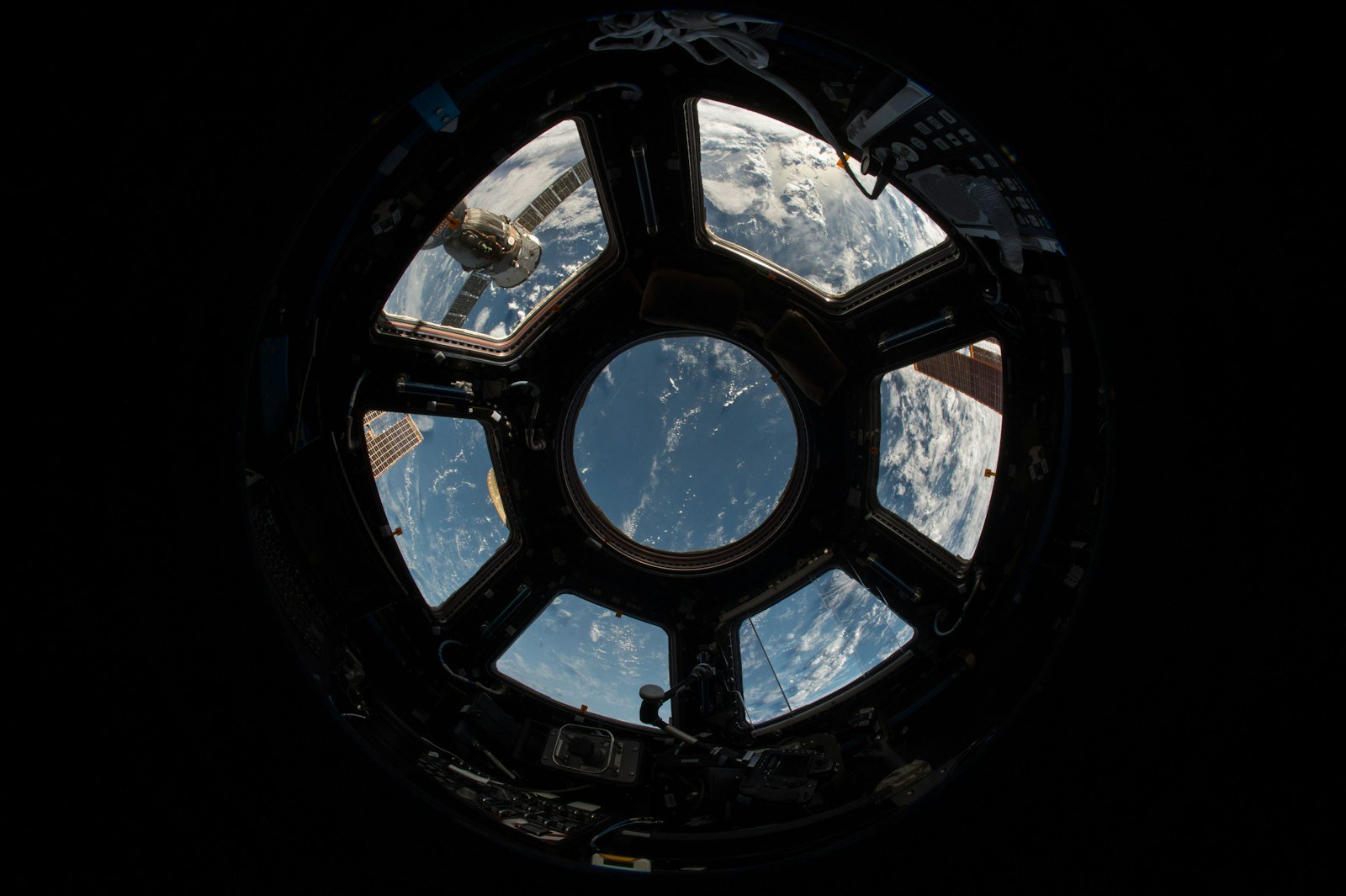
The Chandrayaan-4 mission is India’s most ambitious lunar undertaking yet: a robotic sample-return flight designed to bring Moon rock and soil back to Earth for the first time in the country’s space program. The Union Cabinet, chaired by Prime Minister Narendra Modi, approved the mission with a budget of ₹2,104.06 crore (roughly $253 million), building directly on the success of Chandrayaan-3’s 2023 south-pole landing. Chandrayaan-4 is meant to prove out the docking, undocking, ascent, and safe Earth-reentry technologies India needs before it can put an astronaut on the Moon by 2040. This explainer covers what was approved, how the mission will work, and when it might actually launch.
What Was Approved, and When
The Union Cabinet approved Chandrayaan-4 on September 18, 2024, describing it as a mission to “develop and demonstrate the technologies to come back to Earth after successfully landing on the Moon and also collect moon samples and analyse them on Earth.” The Indian Space Research Organisation (ISRO) is responsible for spacecraft development and launch, with the government stipulating significant participation from Indian industry and academia and requiring that all critical technologies be developed indigenously.
The total funding of ₹2,104.06 crore covers spacecraft development, two Launch Vehicle Mark-3 (LVM3) missions, external Deep Space Network support, and the specialised testing needed to validate the design. The government set a target of completing the mission within 36 months of approval, which points to a launch window around 2027, though ISRO’s own 2025 outreach materials describe the mission as planned for the “2027-2028 timeframe.”
How the Sample-Return Mission Will Work
Chandrayaan-4’s architecture is more complex than any previous Indian lunar mission because it must make a round trip rather than a one-way landing. The mission uses two separate LVM3 rocket launches to send up two spacecraft stacks: one combining propulsion, lander, and ascender modules, and a second combining transfer and reentry modules. The two stacks are designed to dock in space before the lander-ascender combination heads down to the lunar surface.
Once on the Moon, the lander collects and containerises samples of lunar soil and rock. The ascender module then lifts off from the surface — a first for India — and docks again with the transfer module in lunar orbit. Finally, the reentry module carries the samples back to Earth and survives atmospheric reentry so scientists can retrieve and analyse the material. In total, the mission must demonstrate lunar orbit docking and undocking, a precision soft landing, sample collection and containerisation, ascent from the surface, and safe high-speed reentry to Earth.
Timeline and Milestones
- August 2023 — Chandrayaan-3 successfully soft-lands near the Moon’s south pole, making India the fourth country to achieve a controlled lunar landing.
- September 18, 2024 — The Union Cabinet approves Chandrayaan-4 with a ₹2,104.06 crore budget and a 36-month completion target.
- April 16, 2025 — ISRO holds a National Science Meet on Chandrayaan-4, bringing together roughly 50 scientists from more than a dozen research and academic institutions to plan lunar sample science.
- 2027–2028 — The mission’s planned launch window, based on ISRO’s stated timeframe and the government’s 36-month target.
- 2040 — India’s target date for its first crewed Moon landing, a goal Chandrayaan-4 is explicitly designed to help enable.
Why a Sample-Return Mission Matters
Only the United States, the former Soviet Union, and China have successfully returned lunar samples to Earth. A successful Chandrayaan-4 would place India in that small group and give Indian scientists direct access to freshly collected, geologically documented material for the first time, rather than relying on samples shared by other space agencies. That matters scientifically because Chandrayaan-3’s earlier instruments, including its RAMBHA-LP and APXS payloads, have already produced new findings about the Moon’s south-polar plasma environment and regolith composition; physical samples would let researchers verify and extend that remote-sensing data with laboratory-grade analysis.
At ISRO’s April 2025 science meet, officials framed Chandrayaan-4 as a milestone in a longer roadmap: Scientific Secretary M. Ganesh Pillai linked the mission to India’s eventual goal of a crewed Moon landing by 2040, while the Physical Research Laboratory (PRL) in Ahmedabad and the U R Rao Satellite Centre (URSC) outlined plans for new sample curation and analysis facilities that would become permanent national assets.
| Category | Detail |
|---|---|
| Cabinet approval date | September 18, 2024 |
| Approved budget | ₹2,104.06 crore (~$253 million) |
| Launch vehicles | Two LVM3 missions, launching separate spacecraft stacks |
| Key technologies demonstrated | Lunar orbit docking/undocking, soft landing, sample collection, surface ascent, Earth reentry |
| Target completion | Within 36 months of approval (≈ 2027, per ISRO framed as 2027–2028) |
| Long-term goal supported | Crewed Indian Moon landing by 2040 |
Part of a Wider Indian Space Push
Chandrayaan-4 was approved alongside a broader package of roughly ₹32,000 crore in space proposals, including a Venus Orbiter Mission, a Bharatiya Antariksh Station (BAS) module, and a next-generation reusable launch vehicle. Officials have described the space station module approval as a step toward a self-sustained Indian space station by 2035, positioning Chandrayaan-4 as one piece of a coordinated push to expand India’s human spaceflight and deep-space capabilities over the next decade and a half.
Limitations and Uncertainties
- No firm launch date has been publicly confirmed; the 36-month completion target and ISRO’s own “2027-2028 timeframe” description leave a wide window.
- India has not yet demonstrated lunar-orbit docking, ascent from the lunar surface, or high-speed Earth reentry from lunar distances — all required for this single mission to succeed.
- The two-launch, multi-docking architecture is inherently more complex than Chandrayaan-3’s single-launch design, meaning the mission depends on two consecutive successful LVM3 launches and multiple precision rendezvous events.
- Budget and schedule figures reflect the 2024 Cabinet approval; costs and timelines for complex space missions often shift during development.
Frequently Asked Questions
What will Chandrayaan-4 actually bring back to Earth?
Lunar soil and rock samples collected robotically from the Moon’s surface, packaged in a containerisation system, and carried back to Earth inside a dedicated reentry module for laboratory analysis.
How is Chandrayaan-4 different from Chandrayaan-3?
Chandrayaan-3, launched in 2023, only landed and operated a rover on the lunar surface; it never left the Moon. Chandrayaan-4 must additionally lift off from the surface, dock in lunar orbit, and survive reentry to Earth — a full round trip that requires several technologies India has not previously flown.
When will Chandrayaan-4 launch?
The government’s 2024 approval set a target of completing the mission within 36 months, and ISRO’s 2025 science meet described the mission as planned for the “2027-2028 timeframe.” No exact launch date has been announced.
How much does Chandrayaan-4 cost?
The Union Cabinet approved a total outlay of ₹2,104.06 crore (about $253 million), covering spacecraft development, two LVM3 launch vehicle missions, Deep Space Network support, and design validation testing.
Why does Chandrayaan-4 matter for India’s 2040 crewed Moon goal?
Chandrayaan-4 is explicitly designed as a technology demonstrator for the docking, undocking, ascent, and safe-return capabilities India needs to master before it can safely send its own astronauts to the Moon and bring them home, a goal the government has targeted for 2040.
Bottom Line
Chandrayaan-4 represents India’s leap from lunar landing to lunar round trip. The Cabinet approval, budget, and 2027-2028 target window are confirmed, but the mission still needs to prove several never-before-flown Indian capabilities — ascent, orbital docking, and reentry — before any sample makes it back to a laboratory on Earth. Success would make India only the fourth nation to return lunar material and a significant step closer to its 2040 crewed Moon landing ambition.
Primary Sources
- ISRO — National Science Meet on the Chandrayaan-4 Lunar Sample Return Mission
- PMO India — India Goes to Moon Again: Cabinet Approves Chandrayaan-4
- SpaceNews — India Approves Moon Sample Return, Venus Orbiter, Space Station Module and Reusable Launcher
- NDTV — Cabinet Approves New Moon Mission “Chandrayaan-4”
Related Topic Express coverage
Featured image: Photo via Unsplash (photo-1446776877081-d282a0f896e2); free to use under the Unsplash License. Illustrative only.