









Roman Space Telescope fueled is the core development covered in this report. Below is a sourced breakdown of what is confirmed, what remains uncertain, and why it matters.
Why Roman Space Telescope fueled matters now
This section focuses on the practical implications of Roman Space Telescope fueled for readers following the story — what changed, what is confirmed, and what remains open.
On 25 July 2026, technicians at NASA’s Kennedy Space Center finished loading roughly 290 gallons of hydrazine into the Nancy Grace Roman Space Telescope—an unglamorous but mission-critical step that moves the observatory from integration into the final launch-campaign sequence. NASA documented the milestone on its Roman mission blog on 27 July 2026, confirming that fueling took place inside the Payload Hazardous Servicing Facility and that the agency and SpaceX are still targeting liftoff no earlier than 7:26 a.m. EDT on Sunday, 30 August 2026, aboard a Falcon Heavy from Launch Complex 39A.
Hydrazine is not a science instrument. It is the working fluid for Roman’s thrusters after the observatory separates from the launch vehicle. NASA’s account states that the propellant will be used for trajectory and station-keeping maneuvers as Roman travels to Sun–Earth Lagrange point 2 (L2), about one million miles from Earth—roughly four times the Earth–Moon distance—and then to keep the spacecraft oriented so its solar arrays face the Sun. The blog notes a five-year primary mission and enough fuel, in NASA’s assessment, to support a potential additional five years if an extended mission is approved and hardware remains healthy.
Why fueling matters more than the calendar headline
Public attention naturally gravitates to the August launch date and to Roman’s science pitch: wide-field infrared surveys of dark energy, dark matter, and exoplanets. Fueling, by contrast, is a hazardous-operations gate. Once propellant is onboard, handling constraints tighten, the flight configuration becomes harder to reverse, and the remaining major mechanical steps—adapter mating and fairing encapsulation—proceed under a stricter safety envelope. In that sense, the 25 July completion is less a symbolic ribbon-cutting than evidence that Kennedy processing has advanced past one of the last high-risk ground procedures.
NASA also reported that the Roman team recently cleaned and checked out the observatory’s six solar array panels. Power and propulsion are coupled problems at L2: thrusters maintain the orbit and keep the arrays illuminated, while the arrays supply the electricity that keeps instruments and spacecraft systems alive. Completing both fueling and array checkout in the same prelaunch window reduces the chance that a late anomaly in either system forces a schedule slip after fairing closeout.
Data comparison: Roman’s schedule versus recent NASA flagship cadence
NASA’s July 27 blog states that Roman is launching about nine months ahead of its prior schedule. That claim is unusual among large astrophysics observatories of the past decade, which more often slipped rightward under integration complexity, pandemic disruptions, or instrument rework. A useful comparison is not “faster is always better,” but what “nine months early” implies for risk posture: the schedule acceleration compresses contingency between fueling, encapsulation, rocket integration, and the opening of the late-August launch window. If a post-fueling anomaly appears, the same early schedule that looks like success can become a narrower recovery window.
Another quantitative contrast sits in communications and survey scale rather than calendar days. Mission briefings and NASA public materials emphasize that Roman’s Wide Field Instrument is designed to map far more sky, far faster, than Hubble’s camera suite over comparable campaign lengths—public discussion around the July 28–29 media cycle has repeatedly cited order-of-magnitude survey-speed advantages relative to Hubble’s multi-decade imaging archive. Those figures are projections about survey yield, not results in hand. Fueling does not prove the survey will meet those forecasts; it only removes a ground obstacle between the projection and on-orbit commissioning.
What the evidence does and does not show
The verified public record supports several concrete claims: fueling of about 290 gallons of hydrazine was completed on 25 July 2026 at Kennedy; NASA published that update on 27 July; L2 is the intended destination; thrusters will use the propellant for transit and orbit/attitude control; the targeted launch remains no earlier than 30 August 2026 on Falcon Heavy; and NASA describes a five-year prime mission with propellant margin discussed for a possible extension.
The same record does not show that launch will occur on 30 August regardless of weather, range, or vehicle readiness; that the extended mission is approved; that dark-energy or exoplanet science results are already in; or that every remaining ground test is complete. Encapsulation, stack integration, and range clearance remain ahead. Treat the fueling announcement as a processing milestone with primary-source confirmation, not as a guarantee of on-time science return.
Limitations
This explainer relies on NASA’s official Roman blog and contemporaneous agency communications. It does not include proprietary anomaly reports, closed-door Flight Readiness Review packages, or independent metrology of the propellant load. Schedule language such as “nine months ahead” is NASA’s characterization of its own baseline; outside auditors may define “ahead” differently depending on which milestone dictionary they use. Science-yield comparisons to Hubble are mission-design expectations, sensitive to survey strategy, data-processing latency, and on-orbit performance that cannot be measured until after commissioning.
Reader FAQ
Is Roman already fueled for launch day?
Yes for the spacecraft tanks, according to NASA: the 290-gallon hydrazine load was completed 25 July 2026. That does not mean the stacked Falcon Heavy is flight-ready; vehicle and range milestones remain.
What is L2, and why send Roman there?
Sun–Earth L2 is a gravitationally convenient region about a million miles from Earth where an observatory can maintain a stable vantage with favorable thermal and sky-access conditions for infrared survey work. NASA explicitly frames L2 as Roman’s destination after separation and outbound maneuvers.
Does early fueling increase risk?
Fueling increases operational constraints because hydrazine is hazardous and the spacecraft becomes harder to rework. Agencies accept that trade when they judge the rest of the flow mature. Public materials do not quantify residual risk; they report that the step is complete.
Where can I read the primary sources?
Start with NASA’s fueling update: NASA Fuels Roman Space Telescope for Late August Launch. For mission context, see the Nancy Grace Roman Space Telescope mission page and NASA’s 2026 news releases noting the 29 July media briefing cadence around the August launch.
Roman’s July fueling story is ultimately about operational maturity: a large infrared survey telescope is no longer an abstract schedule line—it is a fueled spacecraft entering the final mechanical packaging for a late-August attempt to leave Earth. The analytically honest stance is to credit the verified ground milestone while keeping science claims and launch timing in the provisional column until flight and commissioning deliver data.
Related Topic Express coverage
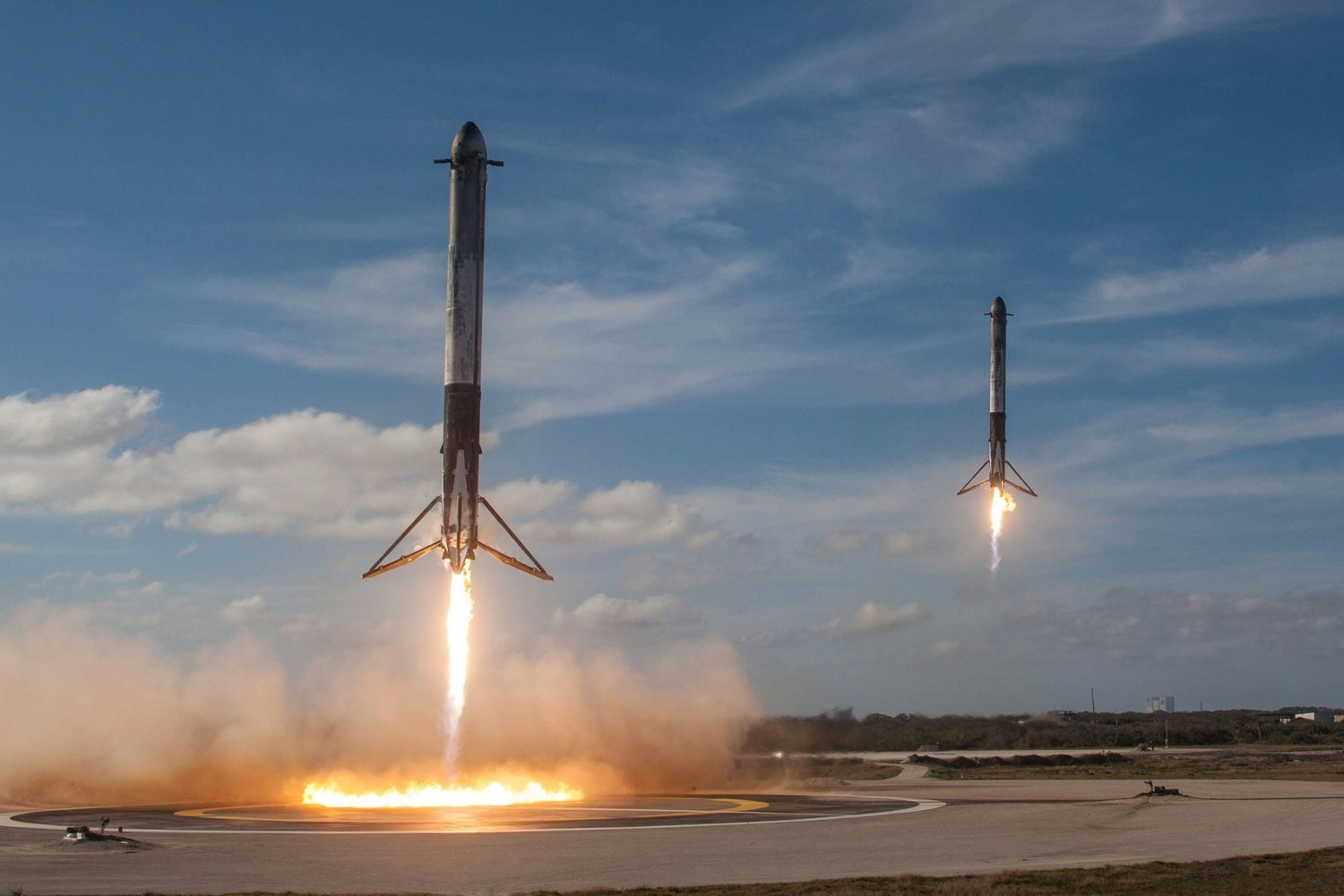
Featured image: Unsplash (free license) — rocket launch photograph; illustrative of launch-campaign context, not an official Roman fairing photo.