










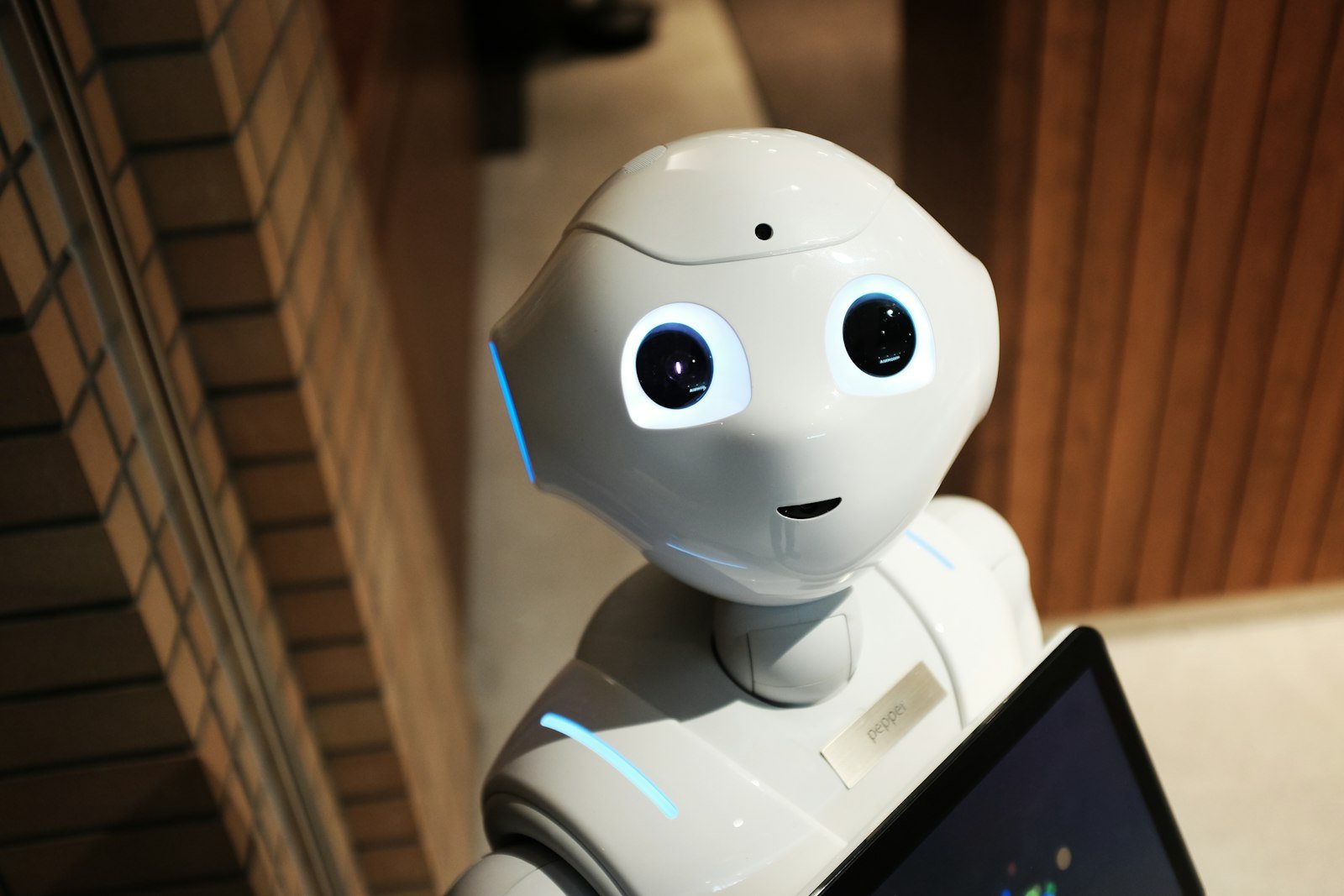
FCC humanoid robot ban is the core development covered in this report. Below is a sourced breakdown of what is confirmed, what remains uncertain, and why it matters.
Why FCC humanoid robot ban matters now
This section focuses on the practical implications of FCC humanoid robot ban for readers following the story — what changed, what is confirmed, and what remains open.
The U.S. Federal Communications Commission is blocking new imports of foreign-made humanoid robots and related advanced mobile robots after an executive-branch national security determination that such devices pose unacceptable risks. The Associated Press reported the action on July 28-29, 2026, noting that the ban also covers quadruped “robot dogs,” and that connected power inverters used in renewable systems, data centers and appliances were added in the same wave of restrictions.
China, which AP said accounts for an estimated 85% of the global humanoid robot market, accused Washington of protectionism and said it would take “all measures necessary” to defend Chinese firms. The timing raises the diplomatic temperature ahead of a planned September meeting between Chinese leader Xi Jinping and U.S. President Donald Trump.
What the Covered List change actually does
The FCC maintains a Covered List of communications equipment and services deemed to pose unacceptable national security risks. Equipment on that list is generally barred from receiving new FCC equipment authorizations required for importation, marketing and sale in the United States. On Tuesday, foreign-produced “advanced robotic devices,” defined to include mobile robots such as humanoids and quadrupeds, and foreign-produced connected power inverters were added following an interagency determination.
FCC Chair Brendan Carr framed the decision as an effort to “secure America’s critical supply chains,” according to AP. Critically, the agency’s public explanations emphasize that the action targets new versions seeking authorization. Previously authorized models can generally still be sold, imported and used; consumers are not being ordered to discard robots or inverters already cleared for the U.S. market.
Official materials and contemporaneous explainers also describe a Conditional Approval path: if the Department of War (formerly Defense) or, for inverters, the Department of Homeland Security finds that a device or class of devices does not pose unacceptable risks, those products may still obtain FCC authorization. Applications have been directed through FCC conditional-approval channels described in agency notices.
Why robots and inverters are treated as security issues
Policymakers argue that networked robots with cameras, microphones, sensors and remote-control stacks create surveillance and sabotage pathways if adversaries can access them. BBC reporting on the announcement summarized FCC concern that foreign-made robots could enable malign actors to surveil Americans, enhance foreign intelligence capabilities, or remotely commandeer machines. Connected inverters raise a different but related worry: remote disablement, data theft, or cyber exploitation inside power and data-center infrastructure.
The determination is production-location based rather than a named-company blacklist in the FCC’s public summary language. In practice, Chinese manufacturers dominate shipment volumes, so market impact concentrates there even though the text is not limited to one country. AP cited Omdia figures that of roughly 15,000 humanoid robots shipped globally in 2025, China’s Unitree and AGIBOT each shipped more than 5,000, while U.S. peers such as Tesla and Figure AI shipped a few hundred or fewer.
Industry and diplomatic fallout
Morningstar analyst Kangyuxiao Li told AP that Chinese firms have scaled production and cut costs faster than many overseas rivals, and that restricting U.S. access removes an important future market while shielding U.S. developers from price competition without materially slowing China’s domestic humanoid push. Morgan Stanley analysts have previously projected China’s humanoid market could reach about $15 billion by 2030.
Cross-border design partnerships may also face friction. Omdia’s Lian Jye Su noted that Nvidia disclosed a humanoid reference design in June that used a Unitree chassis, an example of how U.S. compute and Chinese mechanical platforms have been intertwining. Separately, the Pentagon has listed Unitree and other Chinese technology firms as having ties it says aid China’s military; Beijing rejects that characterization.
China’s Foreign Ministry spokesperson Mao Ning said protectionism would not make the United States more competitive and would hurt U.S. companies and consumers. Samm Sacks of New America told AP the measure fits a “steady drumbeat of potential flashpoints” ahead of the planned Trump-Xi summit.
What is not banned
- Continued use of advanced robots and power inverters consumers already own.
- Import, marketing or sale of models the FCC previously authorized.
- Devices that receive Conditional Approval from designated U.S. national security agencies.
- Domestic U.S. production seeking ordinary equipment authorization outside Covered List constraints.
For solar installers, data-center operators and robotics startups, the practical question is product roadmap risk: can next-generation foreign hardware clear Conditional Approval, or must U.S. buyers redesign around domestic or allied supply? Inverters, because they sit inside energy and computing infrastructure, may have broader near-term commercial impact than humanoids, which remain an early-volume category in the United States.
How this fits the wider tech-controls cycle
The robot and inverter additions follow earlier U.S. restrictions on Chinese drones and other connected equipment, plus export controls on advanced semiconductors. Washington is also weighing tighter rules around Chinese open-source AI models. Taken together, the policy direction is clear: connectivity plus foreign production equals heightened scrutiny, even in consumer-adjacent categories that once looked like ordinary electronics.
Businesses should review FCC equipment authorization status before ordering new foreign robot platforms, document whether installed inverters were previously authorized, and monitor Conditional Approval guidance. Investors in U.S. robotics names may see a protected home market; investors in China-listed robot makers may need to mark down U.S. growth assumptions without abandoning global expansion elsewhere.
Universities, warehouses and research labs that planned pilots with newly released foreign humanoids may need substitute platforms or delayed timelines. Integrators should ask vendors for written confirmation of prior FCC authorization dates and whether a model is a new SKU that would require fresh approval. In the inverter channel, distributors are likely to prioritize previously cleared inventory while mapping which next-generation products can pursue Conditional Approval.
The politics remain fluid. A September leadership meeting could soften tone without immediately rewriting the Covered List, or it could harden into reciprocal Chinese measures against U.S. robotics and energy hardware. Either way, compliance teams should treat the July update as durable until the FCC publishes an explicit reversal, not as a bargaining chip that disappears after a summit photo.
FAQ
Does the FCC ban cover all foreign robots?
It targets foreign-produced advanced robotic devices described as mobile robots such as humanoids and quadrupeds, plus connected power inverters. Previously authorized models are generally unaffected.
Is China the only country affected?
The Covered List update is framed around foreign production, not a single nationality. China’s manufacturing scale means Chinese firms are most exposed in practice.
Can a foreign maker still sell a new model in the U.S.?
Only if it obtains Conditional Approval from the relevant U.S. national security agencies and then proceeds through FCC authorization, or if it falls outside the covered definitions.
Primary sources
Related coverage on Topic Express
- Trump vs China: The Political Tug of Trade Power
- South Korea Stocks Plunge on AI Jitters
- Amazon Layoffs and the AI Restructuring Wave
- Business & Finance desk
The FCC’s move is best understood as a market-access gate on future foreign hardware, not a recall of machines already approved. For readers tracking U.S.-China tech rivalry, robots and inverters now sit beside drones and networking gear on the list of connected products Washington treats as security-sensitive by default.
Image: Photo via Unsplash (Unsplash License)
Related Topic Express coverage
- China Humanoid Robot Retaliation Threat Explained
- Chinese Humanoid Robot IPO Plans Clouded by US Import Curbs