










Haiti election calendar 2026 is the core development covered in this report. Below is a sourced breakdown of what is confirmed, what remains uncertain, and why it matters.
Why Haiti election calendar 2026 matters now
This section focuses on the practical implications of Haiti election calendar 2026 for readers following the story — what changed, what is confirmed, and what remains open.
On July 27, 2026, Haiti’s Provisional Electoral Council (CEP) published a revised electoral calendar setting December 13, 2026, as the date for first-round presidential and legislative elections, with a second round—and local elections—scheduled for February 21, 2027. France 24 and The Haitian Times both reported the announcement the same week, noting that Haiti has not completed a national election cycle since the disputed 2015–2016 process.
The calendar is a primary institutional document with conditions attached. The CEP itself says the timetable depends on an “acceptable security climate” and “the necessary funds.” That dual caveat is the center of this explainer: the dates reduce uncertainty about sequencing, but they do not by themselves create the security or financing needed to hold a credible vote.
Timeline
- 2016–2026: Haiti goes a decade without a completed national election cycle after the last presidential transition from the 2015–2016 contests. President Jovenel Moïse’s 2021 assassination and subsequent institutional breakdown deepen the vacuum.
- April 2026: The CEP withdraws an earlier calendar (first round Aug. 30; runoff Dec. 6) at the government’s request while electoral rules are realigned with a National Pact for Security and the Organization of Elections and with constitutional-reform plans.
- Early July 2026: The CEP and government converge on a proposed $120 million election budget (down from a higher CEP ask), but Cabinet approval and official publication remain incomplete as of the calendar announcement, according to The Haitian Times.
- July 20, 2026: Voter registration launches in nine of ten departments; the West Department, which includes Port-au-Prince, is excluded because of widespread gang control, the CEP says.
- July 23: Revised calendar submitted to the government.
- July 27: CEP publishes the calendar: Dec. 13 first round; Feb. 21, 2027, second round; final results targeted for March 7; installation of officials by March 12, 2027.
Primary-document analysis: the calendar itself
According to the CEP press materials summarized by The Haitian Times, the first round covers presidential and legislative races plus a popular vote on proposed constitutional reforms. The February round covers local elections and any required runoffs. Intermediate milestones include candidate registration (Aug. 20–Oct. 2, 2026) and the first-round campaign (Oct. 5–Dec. 12, 2026).
Two features of the document deserve careful reading.
1) Conditional force. Unlike a statute that automatically binds regardless of context, this calendar is published with explicit prerequisites: nationwide security restoration sufficient for voters, candidates, workers, and materials to move safely; and secured financing. In institutional terms, the CEP is publishing a plan while retaining a public off-ramp if conditions fail. That is transparent—and also a warning that December is not guaranteed.
2) Sequencing after political criticism. A July 20 memorandum from the coalition Forces Politiques et Sociales de l’Opposition Progressiste had argued that without a serious calendar, logistics, registration, sensitive-materials acquisition, and poll-worker training become impossible. The July 27 publication answers that process critique. It does not answer the security critique.
3) Partial territorial coverage of registration. Launching registration while excluding the West Department is an administrative adaptation to violence, not a full national roll. Any December election held under similar territorial constraints would face legitimacy questions about equal access—questions the calendar text does not resolve.
Competing scenarios
Scenario A — Conditional success. Security improves enough in key corridors; the $120 million budget is approved and partly supported by partners (BINUH, UNDP, and other UN entities have already been consulted on costing, per earlier Haitian Times reporting); registration expands; Dec. 13 proceeds with observable flaws but recognized results.
Scenario B — Calendar slip without cancellation narrative. Authorities keep the formal dates while quietly delaying candidate processes or materials, then announce a “technical” postponement in the autumn—repeating the April pattern under new labels.
Scenario C — Security veto. Gang control of Port-au-Prince and highway checkpoints—described in UN-linked reporting as covering a large share of the capital—prevents safe polling. The CEP invokes its own prerequisites and suspends the timetable. Political actors then fight over whether the transitional authorities have failed or whether international security support was inadequate.
What remains uncertain
- Whether the $120 million budget receives Cabinet approval and how much external financing materializes.
- When, if ever, voter registration can operate safely in the West Department.
- The final legal text of constitutional-reform questions that would appear on the December ballot.
- How party coalitions will treat participation versus boycott if security and access remain uneven.
On violence metrics, public reporting in late July cited United Nations figures indicating more than 2,300 people killed in Haiti since the start of 2026 and continued armed-group control over most of Port-au-Prince. Those figures should be treated as UN-attributed situational indicators, not as CEP electoral statistics. Separate local reports of mass-casualty attacks and kidnappings of senior aides illustrate operational risk without requiring this explainer to adjudicate every incident tally.
FAQ
Is December 13 locked in?
It is the published first-round date, explicitly conditioned on security and funding.
What offices are at stake?
Presidential and legislative seats in the first round, plus a constitutional-reform vote; local races and runoffs in February 2027.
How many parties are cleared?
The CEP earlier approved 316 of 320 parties that sought to meet membership rules under a June 2 electoral decree, according to The Haitian Times.
Why was the August calendar dropped?
The CEP withdrew it in April at the government’s request while aligning the framework with a security-and-elections pact and constitutional-reform planning.
Why the calendar still matters
Even a conditional calendar changes bargaining. Parties can schedule candidate recruitment against named windows; donors can attach disbursements to milestones; and security planners can map corridor priorities to registration and polling dates. Without dates, every actor can claim preparation while deferring accountability. With dates, failures become measurable—late materials, closed registration sites, unpaid poll workers—rather than endlessly abstract.
Bottom line
Haiti’s July 27 calendar is a real institutional advance: it restores a public sequence after months of criticism that preparations were occurring without a roadmap. It is not yet a guarantee of a December vote. The CEP wrote the governing constraints into the announcement itself—security and money. Those two variables, more than the elegance of the date grid, will decide whether 2026 ends Haiti’s decade-long national election drought.
Primary sources and reporting: The Haitian Times (CEP calendar details); France 24; The Haitian Times ($120M budget reporting); UN Integrated Office in Haiti (BINUH).
Related Topic Express coverage
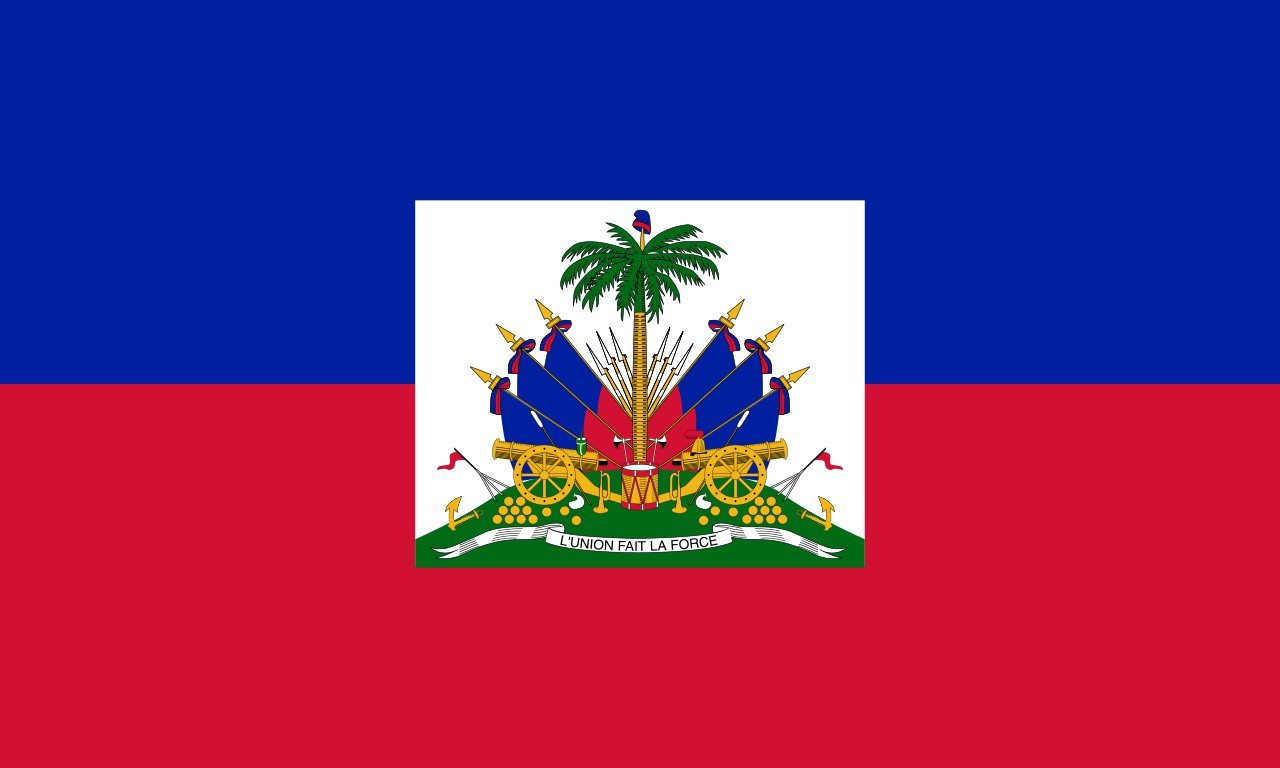
Featured image: Flag of Haiti, public domain, via Wikimedia Commons