







US France UN Security Council walkout is the core development covered in this report. Below is a sourced breakdown of what is confirmed, what remains uncertain, and why it matters.
Why US France UN Security Council walkout matters now
This section focuses on the practical implications of US France UN Security Council walkout for readers following the story — what changed, what is confirmed, and what remains open.
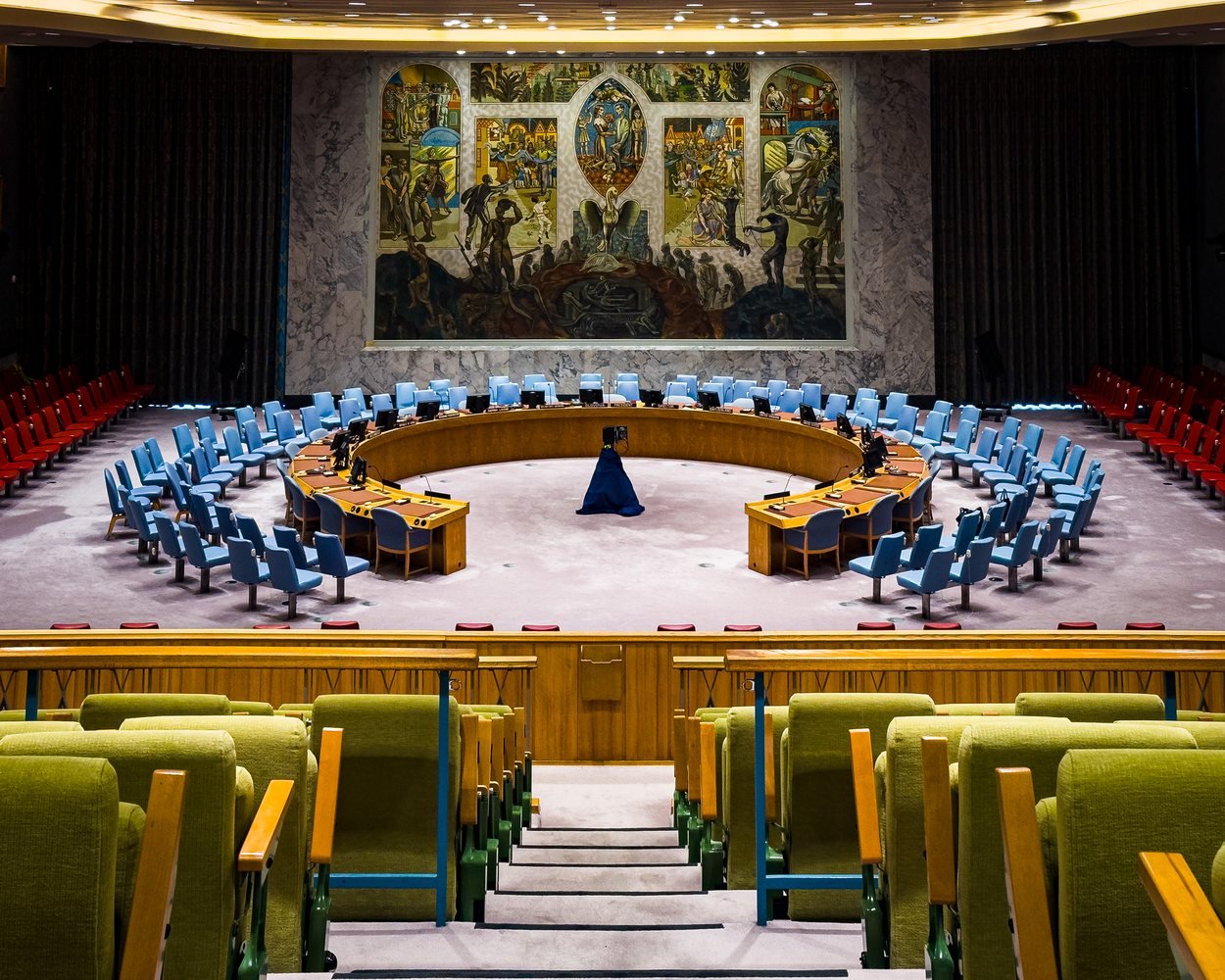
On July 27, 2026, the United States delegation briefly walked out of a United Nations Security Council meeting while France’s ambassador was speaking. The session’s agenda was Russia’s war against Ukraine. The walkout’s trigger was not that agenda. It was a public quarrel—already playing out on social media—over Washington’s vote against renewing the mandate of UN High Commissioner for Human Rights Volker Türk, and France’s decision to compare that vote to the positions of authoritarian states.
The episode matters because it occurred between two permanent members of the Security Council (the P5), inside the chamber that is supposed to manage collective security. It also sits inside a broader pattern: the Trump administration’s reduced funding for UN bodies, withdrawals from multiple UN entities since 2025, and sharper public friction with European allies over human-rights institutions, NATO politics, and trade. This explainer reconstructs the timeline, reads the primary statements, maps competing scenarios, and flags what remains uncertain.
What happened, in plain terms
According to reporting by the BBC, Al Jazeera, France 24, and TIME, U.S. diplomats left the room as French Ambassador Jérôme Bonnafont took the floor at an emergency Security Council meeting on Ukraine. Afterward, alternate U.S. representative Dan Negrea told the Council that the walkout was deliberate and would continue until France “renounces” what he called “condescending and disrespectful rhetoric.” Negrea framed France’s criticism as “disingenuous grandstanding” and said the United States had previously tolerated similar conduct “out of a sense of camaraderie and mutual respect as P5 members.”
Bonnafont, for his part, did not dwell on the walkout in his intervention. He emphasized France’s interest in preserving the UN’s independence and capacity to act. Near the end of the tense meeting, he also referenced France’s participation in U.S. Independence Day events marking America’s 250th anniversary and reaffirmed a willingness to work together—signaling that Paris wanted to keep the bilateral channel open even while the dispute remained public.
Timeline of the dispute
- Friday, July 24–25, 2026: The UN General Assembly votes to extend Türk’s four-year term. Reporting consistently cites a tally of 144 in favor, 10 against, and 13 abstentions. The United States is among the “no” votes, alongside Russia and North Korea, among others.
- Saturday, July 25: France’s UN Mission in Geneva posts that the United States “used to be a beacon of human rights. Not anymore,” and says Washington “stands alongside North Korea, Nicaragua, Mali & Russia, isolated.”
- July 26: U.S. Ambassador to the UN Mike Waltz replies that France backed a rights chief who has been “lecturing free, sovereign democracies” while “cozying up to the world’s worst oppressors.”
- Monday, July 27: During a Security Council meeting on Ukraine, the U.S. delegation walks out for France’s intervention. Negrea announces a conditional policy of continued walkouts until France renounces the contested rhetoric.
- July 27–28: Major outlets frame the episode as both a procedural protest and a symptom of a wider U.S.–Europe rift under Trump and French President Emmanuel Macron.
Primary-document analysis
Three classes of primary material define the dispute.
1) The General Assembly renewal vote. High Commissioner appointments are a General Assembly matter, not a Security Council veto question. The reported 144–10–13 outcome is therefore a political signal more than a legal cliff: Türk secured a large majority; the U.S. “no” vote did not block the result. U.S. Ambassador Jeff Bartos, according to contemporaneous reporting, warned of “consequences” for what Washington described as procedural overreach and misuse of UN posts—language that treats institutional process as contested terrain, not merely personnel preference.
2) France’s Geneva mission statement. The French post’s operative move is comparative isolation: placing the United States in a voting cohort with North Korea and Russia. Diplomatically, that is a status insult aimed at domestic and international audiences. It is not a Security Council resolution, a Chapter VII finding, or a treaty interpretation. Its force is reputational.
3) Negrea’s Council floor statement. By announcing a standing walkout rule tied to French rhetoric, the U.S. converted a bilateral social-media quarrel into a procedural lever inside the Council. Walkouts do not change voting math by themselves, but they do disrupt the theater of P5 unity and can complicate negotiation choreography on Ukraine and other files. Deputy UN spokesperson Farhan Haq, according to the BBC, declined to comment on the walkout and said the UN expected member states to respect the Assembly’s decision on Türk—keeping the Secretariat out of the bilateral feud while defending institutional outcomes.
Competing scenarios
Scenario A — Contained protocol fight. France issues a quieter clarification; the United States ends the walkout practice; both sides return to transactional cooperation on Ukraine and other Council business. This is the lowest-cost path and fits Bonnafont’s conciliatory closing notes.
Scenario B — Institutionalization of protest. Walkouts become a recurring U.S. tool whenever France (or other European allies) publicly criticizes Washington on human-rights votes. The Council’s Ukraine briefings become more theatrical and less deliberative, without a formal change in procedure.
Scenario C — Linkage to funding and mandates. Washington pairs rhetorical protest with further funding freezes, staffing pressure, or threats to reassess engagement with the Office of the High Commissioner for Human Rights. That would turn a one-day walkout into a multi-year institutional contest over the human-rights architecture.
What remains uncertain
- Whether Negrea’s “continue to walk out” line is a firm White House instruction or a tactical floor statement that can be walked back.
- Whether France will formally retract, partially soft-pedal, or stand by the Geneva mission’s comparative language.
- How far the dispute will spill into other P5 and European files—NATO spending politics, trade frictions, and Middle East policy differences already cited in coverage as background stressors.
- What concrete “consequences” Washington intends, if any, beyond messaging, for the Assembly’s renewal of Türk.
FAQ
Did the walkout change the Ukraine meeting’s legal outcome?
No. A walkout is a political protest. It does not by itself adopt or defeat a Council resolution.
Was the dispute really about Ukraine?
The meeting’s subject was Ukraine. The walkout’s stated cause was France’s human-rights rhetoric after the Türk vote.
Can the United States veto a High Commissioner?
No. The High Commissioner’s appointment/renewal is handled in the General Assembly, where there is no P5 veto.
Why does the comparison to North Korea and Russia sting?
Because human-rights diplomacy often trades on democratic identity and coalition signaling. Being grouped with authoritarian “no” votes is meant to undermine that claim.
Is this unprecedented?
Walkouts and public P5 spats have happened before. What is distinctive here is the explicit linkage to a General Assembly human-rights personnel fight and the threat of repeated walkouts until rhetoric is renounced.
Bottom line
The July 27 walkout is best read as a status conflict over who may police human-rights legitimacy inside the UN system—and how loudly allies may criticize one another—superimposed on a Ukraine meeting. The facts established so far are procedural and documentary: a General Assembly renewal, a French comparative rebuke, a U.S. rebuttal, and a Council walkout with a conditional continuation threat. Whether that sequence remains a one-week flare-up or becomes a habit of institutional protest is still unsettled.
Primary sources and reporting: BBC News; Al Jazeera; France 24; TIME.
Related Topic Express coverage
Featured image: Jdforrester / Wikimedia Commons (CC BY 4.0)