










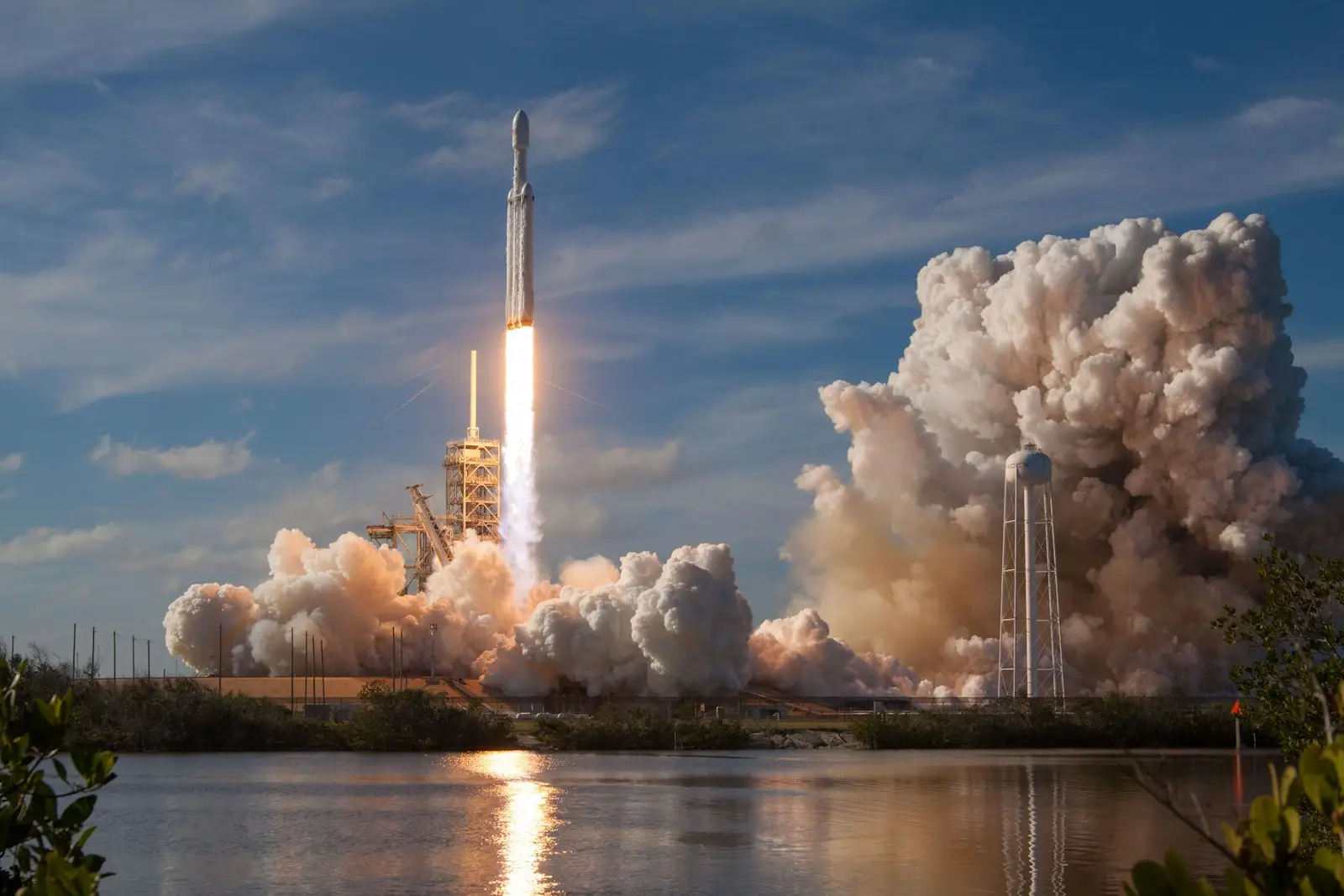
Skyroot Vikram I launch is the core development covered in this report. Below is a sourced breakdown of what is confirmed, what remains uncertain, and why it matters.
Why Skyroot Vikram I launch matters now
This section focuses on the practical implications of Skyroot Vikram I launch for readers following the story — what changed, what is confirmed, and what remains open.
At 12:05:30 PM IST on July 18, 2026, a slender private rocket cleared the First Launch Pad at the Satish Dhawan Space Centre (SDSC), Sriharikota—and with it, India crossed a threshold that space-watchers had been waiting years to see. Hyderabad-based Skyroot Aerospace sent its small-satellite launcher Vikram-I toward Low Earth Orbit, completing what the Indian Space Research Organisation has formally described as the first orbital launch by a private Indian company from Indian soil.
The moment was technical, institutional, and symbolic at once. For decades, orbital flights from Sriharikota have been synonymous with ISRO’s own fleet. Vikram-I did not replace that national programme; it joined it. The vehicle flew with ISRO facilities, safety oversight, and IN-SPACe authorisation behind it—proof that India’s space ecosystem can now carry both a world-class public agency and a growing private industry.
What happened on July 18, 2026
According to ISRO’s official announcement, Vikram-I lifted off from SDSC on July 18, 2026 at 12:05:30 PM. The agency called the flight a significant milestone in the Indian Space Programme and confirmed the core historical claim: this was the first time a private Indian company undertook an orbital launch of a rocket from Indian soil.
ISRO further stated that Skyroot became the first private company to successfully launch to orbit from Indian soil—and that it did so on the first attempt. The mission carried multiple payloads. Two satellites, SCOPE and Grahaa, were injected into Low Earth Orbit. Remaining payloads on the upper stage were intended for various in-orbit experiments.
For readers following the countdown on the ground, the day was not perfectly quiet. Public reporting described a planned hold that pushed liftoff later than an earlier window near 11:30 a.m., with the vehicle ultimately leaving the pad around the 12:05 p.m. time ISRO recorded. Hold or no hold, the outcome that matters for history is the one written into the official record: orbit achieved from Sriharikota by an Indian private launcher.
Why Vikram-I matters for India
India already belongs to a small group of nations able to design, build, and fly orbital rockets. What changed on July 18 is who can do that from Indian soil outside the government launch-vehicle programme. A private team cleared the regulatory, technical, and operational path to orbit using national range infrastructure. That is a different kind of capability—one that expands India’s options in the global small-satellite market without diminishing ISRO’s scientific and strategic missions.
International coverage has widely framed the flight as placing India among a short list of countries with private orbital launch capability, after the United States and China. The pride in that comparison is understandable. The more durable Indian story, though, is domestic: startups can now move from demonstration dreams to real pad time, real range safety, and real orbital results.
From Vikram-S to Vikram-I
Skyroot’s path did not begin with an orbital vehicle. ISRO notes that the company earlier conducted a sub-orbital launch of the test rocket Vikram-S from Sriharikota on November 18, 2022. That flight established operational familiarity with the range. Vikram-I followed as a four-stage small-satellite launcher: three solid stages and a liquid stage, designed to place small satellites into LEO.
The naming is cultural as much as commercial. “Vikram” evokes Dr. Vikram Sarabhai, a founding figure of India’s space programme. The orbital mission has also been publicly associated with the name Aagaman—Sanskrit for arrival—an apt label for a private industry that has spent years preparing to arrive on the pad as a full participant, not only as a supplier.
ISRO and IN-SPACe: partners, not bystanders
One of the clearest messages in ISRO’s note is that Vikram-I was not a lonely private gamble staged far from public institutions. ISRO and IN-SPACe provided handholding and support to facilitate the launch. The details matter, because they show how Indian space reforms are meant to work in practice.
- ISRO provided access to solid-motor casting and static-test facilities at SDSC, Sriharikota.
- The first-stage solid motor was cast and tested at SDSC facilities; the second-stage motor was also validated at the static-test facility there.
- The liquid engine used in the Vikram-I upper stage (RAMAN-I) was tested at the LPSC test facility.
- Pre-launch support covered stage preparation, material handling, transport to the pad, trajectory analysis, and vehicle integration on the First Launch Pad (FLP).
- ISRO’s safety team ensured safe operations by the Skyroot team at SDSC on a 24×7 basis.
IN-SPACe—India’s regulation and promotion agency for space activities—played a major role in creating a workable path for Non-Governmental Entities (NGEs) such as Skyroot to access ISRO facilities, receive technical consultancy, clear mission readiness reviews, and obtain launch clearances. ISRO and IN-SPACe publicly congratulated Skyroot on the successful maiden launch and said the flight paved the way for similar ventures and global commercial opportunities.
Why the 2020 space reforms still matter
ISRO’s announcement places Vikram-I squarely inside the policy arc that began when the Government of India announced space-sector reforms in 2020, allowing private industry to participate more fully in space activities. The Indian Space Policy that followed accelerated the rise of startups working on launch vehicles, satellites, and space applications.
Before those reforms, private firms were essential to India’s space supply chain, but orbital launch from Indian soil remained a government-led undertaking. Opening end-to-end roles to non-government entities changed the ambition of Indian startups: they could pursue full launch vehicles, not only subsystems. Vikram-I is the clearest proof yet that the policy shift was not merely rhetorical. A private orbital liftoff from Sriharikota is what reform looks like when facilities, regulation, and entrepreneurship align.
That alignment also protects the public interest. Range safety, licensing, and facility access remain under national frameworks. India is not outsourcing its space future; it is multiplying the number of Indian actors who can contribute to it.
Commercial outlook after the first private orbital launch
A maiden success does not automatically fill a launch manifest—but it does change how customers, investors, and competing startups calculate risk. Small-satellite operators want responsive launch, competitive pricing, and credible flight heritage. By reaching orbit from Indian soil on a first attempt, Skyroot converted years of ground testing into the one currency the launch market trusts: demonstrated orbital capability.
For India, the commercial upside is broader than one company. Every additional reliable launch option strengthens the case for building, integrating, and flying satellites in India rather than exporting that demand. ISRO’s own heavy and medium launch programmes continue to serve national and international missions; private small launchers can chase the denser, more frequent smallsat cadence that global constellations and technology demonstrators need.
Competition will follow. Other Indian startups are pursuing launch and satellite businesses under the same reform framework. That rivalry is healthy if it stays grounded in safety, transparency, and technical substance. Vikram-I opens the gate; successive flights will decide who walks through it at industrial scale.
What to watch next
The next chapters will be measured in cadence and reliability: follow-on Vikram flights, payload customer wins, and whether Indian private launch can meet schedule promises as confidently as it met orbit this once. Equally important is the institutional playbook—how smoothly IN-SPACe and ISRO can repeat facility access and clearances for other Non-Governmental Entities without bottlenecking either public or private missions.
For the broader science audience, the lesson is simple. India’s space story is no longer only about flagship government missions, remarkable as those remain. It is also about startups leaving Sriharikota with satellites of their own on board—and bringing orbital data home.
FAQ: Skyroot Vikram-I launch
When did Vikram-I launch?
ISRO records liftoff at 12:05:30 PM on July 18, 2026, from the Satish Dhawan Space Centre, Sriharikota.
Was this India’s first private orbital launch from Indian soil?
Yes. ISRO states this was the first time a private Indian company undertook an orbital launch of a rocket from Indian soil, and that Skyroot successfully reached orbit on the first attempt.
What payloads flew?
Multiple payloads flew. ISRO specifically notes that two satellites, SCOPE and Grahaa, were injected into Low Earth Orbit, with other upper-stage payloads intended for in-orbit experiments.
How did ISRO and IN-SPACe help?
They facilitated access to casting, static-test, and liquid-engine test facilities; supported pre-launch operations and First Launch Pad integration; provided continuous safety oversight; and, through IN-SPACe, coordinated authorisation, consultancy, readiness reviews, and clearances for a Non-Governmental Entity.
How is Vikram-I different from Vikram-S?
Vikram-S was a sub-orbital test rocket flown from Sriharikota on November 18, 2022. Vikram-I is a four-stage orbital small-satellite launcher with three solid stages and a liquid stage.
Where can I read the primary source?
Read ISRO’s announcement here: First private orbital launch lifts off from Sriharikota.
Related reading: Explore more space coverage in our Science & Space section, including our feature on the interstellar comet sighting and what visiting ice from beyond the Sun reveals about the wider solar neighbourhood.
Reporting note (July 29, 2026): Core launch facts in this article follow ISRO’s official statement on the Vikram-I flight from Sriharikota. Additional publicly reported mission context is included only where it helps readers understand timing and significance and does not replace the primary agency record.
Image: Photo via Unsplash (Unsplash License)
Related reading: Perseverance Finds Ancient Mars Rock Stack Built by Asteroid Impacts
Related Topic Express coverage
- Google Launches Gemini Spark in India: What the Always-On AI Agent Can Do
- Mobile Phone Manufacturing Scheme: India’s New ₹62,500 Cr Push