










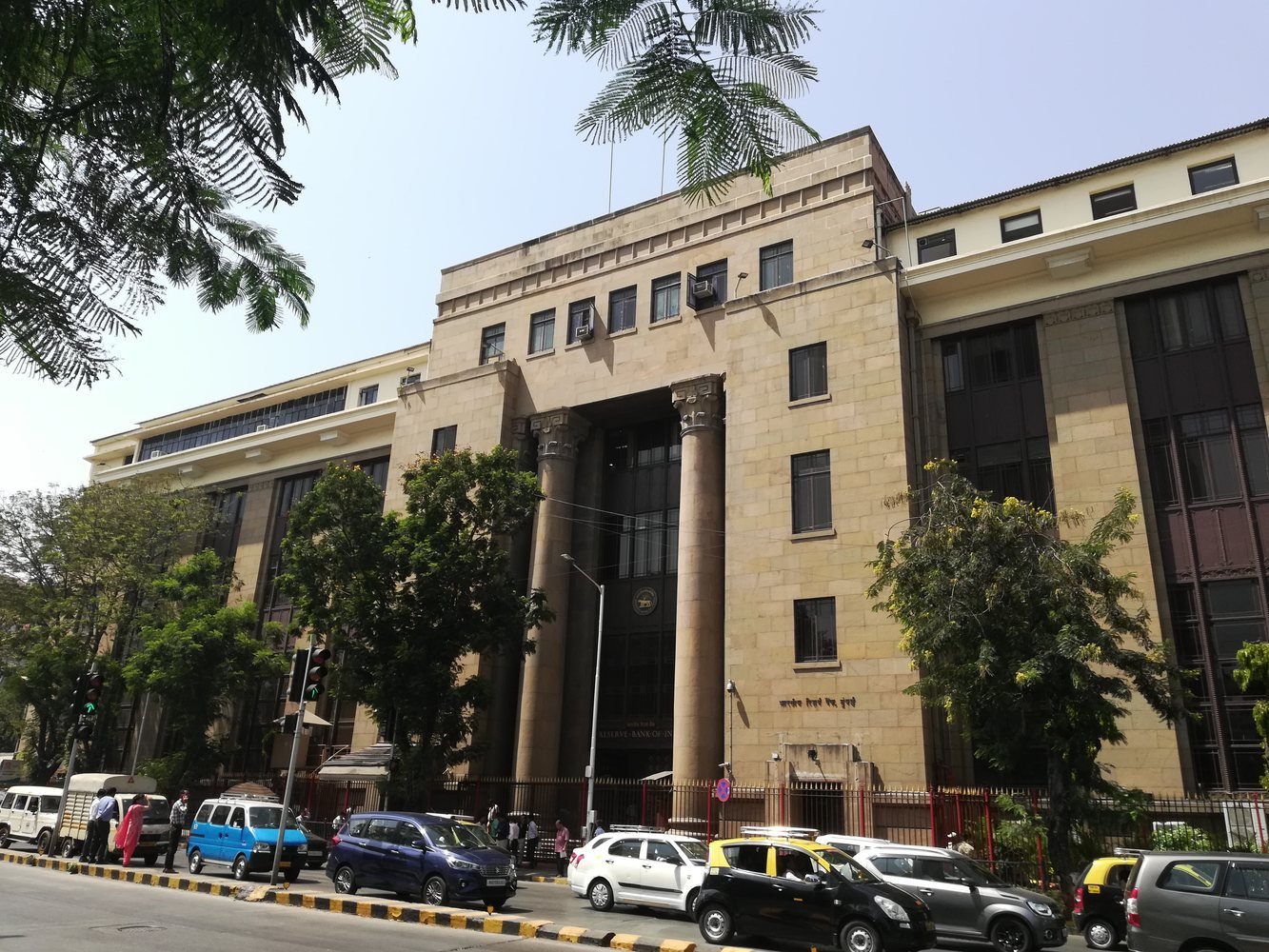
RBI FCNR inflows rupee is the core development covered in this report. Below is a sourced breakdown of what is confirmed, what remains uncertain, and why it matters.
Why RBI FCNR inflows rupee matters now
This section focuses on the practical implications of RBI FCNR inflows rupee for readers following the story — what changed, what is confirmed, and what remains open.
Reserve Bank of India Governor Sanjay Malhotra said banks have mobilised nearly $32 billion under recent measures to attract foreign currency—largely through FCNR(B) deposits—while foreign investors have put more than $7 billion into government securities since the June policy package. In the same interview, published around 27 July 2026, he argued the rupee had become undervalued in both nominal and real effective exchange-rate (REER) terms.
Markets responded quickly. On 27 July the rupee closed at 95.91 per U.S. dollar, up 66 paise, while the BSE Sensex rose 776 points to 76,836 and the Nifty gained 229 points to 23,996, according to contemporaneous market reports. Bankers separately told Reuters that the RBI intensified dollar sales over three sessions, including an estimated $8–9 billion across spot and non-deliverable forwards on one Friday alone, helping push the exchange rate back through the 96 level.
What changed in the external accounts toolkit
FCNR(B) deposits are foreign-currency accounts held with Indian banks by non-resident Indians. When the central bank sweetens incentives—rate ceilings, swap support or related facilities—banks can mobilise dollars without the same immediate equity-market dependence as portfolio flows. Malhotra dismissed concerns that the inflows were merely recycled existing deposits and said the RBI has tools to manage resulting liquidity. On hedging costs for fresh FCNR(B) deposits and concessional forex swaps for public-sector ECBs, he said excess foreign currency is invested in foreign assets, describing the risk-management setup as “foolproof.”
Official reserve data provide a second anchor. In the RBI’s National Summary Data Page release dated 24 July 2026, India’s foreign-exchange reserves stood at $676.237 billion as of 17 July 2026, up $1.080 billion on the week. Foreign currency assets rose $4.549 billion to $551.057 billion, while the value of gold holdings fell $3.480 billion to $101.749 billion. Reserves remain below the $728.494 billion peak reported for the week ended 27 February 2026.
A useful comparison from the primary data
Combine the governor’s flow numbers with the reserve stock. Roughly $32 billion of FCNR(B)-heavy mobilisation plus more than $7 billion of foreign buying in government securities implies about $39 billion of identified post-June inflows. Relative to the $676.237 billion reserve stock on 17 July, that package is about 5.8% of reserves. Relative to the drawdown from the February peak ($728.494 billion − $676.237 billion ≈ $52.3 billion), the ~$32 billion FCNR-centred mobilisation alone equals about 61% of the peak-to-latest reserve gap.
That comparison does not mean reserves were mechanically rebuilt one-for-one by FCNR money—valuation effects, gold prices, intervention and other flows all matter—but it shows why Malhotra’s messaging and the subsequent currency rebound landed with force. The policy package is large enough, relative to the recent reserve drawdown, to change market narratives about external buffers.
| Indicator | Value | Context |
|---|---|---|
| FCNR-centred bank mobilisation | ~$32 bn | Governor Malhotra, interview ~27 July 2026 |
| Foreign G-sec inflows since June measures | >$7 bn | Same interview |
| FX reserves (week ended 17 July) | $676.237 bn | RBI NSDP dated 24 July 2026 |
| Weekly reserve change | +$1.080 bn | FCA +$4.549 bn; gold −$3.480 bn |
| Feb 2026 reserve peak | $728.494 bn | Week ended 27 February 2026 |
| INR close, 27 July 2026 | 95.91 / USD | +66 paise; Sensex +776 pts |
Barclays, in a 28 July note summarised by PTI, argued that the inflows have eased rupee-tail risks enough for the RBI to keep the policy rate unchanged at the August review despite elevated inflation, describing a “neutral pause” as the preferred stance amid Middle East uncertainty and El Niño watchpoints. That is an analyst view, not an RBI commitment, but it shows how quickly the FCNR narrative migrated from currency defence into rate-path debate.
For households and firms, the practical near-term channel is imported-input costs and debt servicing in dollars. A firmer rupee can soften the local-currency cost of oil and components if it holds, while FCNR inflows mainly shore up banking-system foreign currency rather than directly setting retail prices. Distinguishing those channels avoids mistaking a one-day currency rally for broad disinflation.
Scenarios and risks
Stabilisation scenario: FCNR and G-sec inflows continue, intervention remains selective, and the rupee trades with a firmer floor as oil and risk sentiment allow. Broker notes published on 28 July argued that stronger inflows reduce the urgency for an August rate hike and support a neutral pause despite elevated inflation concerns.
Liquidity management scenario: Large foreign-currency deposit inflows ease the external constraint but expand domestic liquidity. The RBI would then need durable sterilisation tools; failure to manage liquidity could complicate inflation control even if the currency looks steadier.
Reversal scenario: FCNR deposits can be rolled off or hedged differently when incentives fade. If geopolitics or crude prices again spike import demand for dollars, markets may test whether the “undervalued” framing still anchors expectations.
Communication risk: Calling the rupee undervalued can encourage speculative positioning. If subsequent data or REER readings do not validate that view, volatility can return quickly.
What the data cannot establish
The $32 billion figure is a mobilisation total described by the governor; public reporting does not provide a full instrument-by-instrument audit trail in the interview summaries. Reserves data cannot isolate how much of any weekly change came from FCNR swaps, intervention, valuation or gold prices. One strong currency session cannot establish a new equilibrium rate. Nor can these numbers prove that inflation will cool, that the August monetary-policy decision is predetermined, or that banks’ FCNR books are free of future refinancing risk.
Reader FAQ
What is FCNR(B)? Foreign Currency Non-Resident (Bank) deposits let eligible non-residents hold foreign-currency deposits with Indian banks. They can supply dollars to the banking system without requiring equity-market buying.
Did reserves fully recover? No. At $676.237 billion on 17 July they remained well below the February peak near $728.5 billion, even after a weekly rise.
Why did gold reserves fall in dollar terms? RBI data show the gold component’s dollar value declined $3.48 billion in the week ended 17 July. That can reflect price moves and/or quantity changes; the weekly table alone does not fully decompose the drivers.
Is this a signal to buy or sell the rupee? This explainer does not offer trading advice. It summarises official remarks, reserve statistics and reported market moves for context only.
Primary sources
Disclaimer: This article is for informational and educational purposes only. It is not investment, trading or financial advice.
Related Topic Express coverage
Featured image: Anurag Vijay 03 / Wikimedia Commons (CC BY-SA 4.0)