








wandering black hole TDE is the core development covered in this report. Below is a sourced breakdown of what is confirmed, what remains uncertain, and why it matters.
Why wandering black hole TDE matters now
This section focuses on the practical implications of wandering black hole TDE for readers following the story — what changed, what is confirmed, and what remains open.
On 27 July 2026, NASA’s Goddard Space Flight Center highlighted a peer-reviewed result that reframes how astronomers hunt dormant supermassive black holes: the Neil Gehrels Swift Observatory helped confirm TDE 2025abcr, a tidal disruption event (TDE) in the outskirts of a massive galaxy about 750 million light-years away. The discovery paper, led by Robert Stein and collaborators, appeared the same day in The Astrophysical Journal Letters and identifies the flare as the first optical TDE found well outside a galactic nucleus by a dedicated off-nuclear search.
A TDE occurs when a star passes close enough to a massive black hole that tidal forces shred it. Debris heats and shines across ultraviolet, optical, and sometimes X-ray bands. Most known optical TDEs have been found near galaxy centers because that is where astronomers expected the black holes—and where search pipelines historically looked. TDE 2025abcr breaks that pattern: NASA’s summary places the event more than 30,000 light-years from the host’s center; the journal abstract quantifies a projected offset of 9.3 kpc (about 95 arcseconds in the discovery imaging geometry).
How the event was caught
The Zwicky Transient Facility (ZTF) first flagged an unusual brightening in November 2025 in the galaxy WISEA J014656.04−152214.7 in Cetus. Stein’s team used an “off-nuclear” implementation of the machine-learning classifier tdescore, which scores ZTF light curves without requiring a nuclear association. NASA’s release quotes Stein noting that, out of roughly half a million ZTF flashes each night, the algorithm recognized a TDE-like flare despite its odd location.
Follow-up sealed the classification. Spectroscopy from facilities including the Southern Astrophysical Research (SOAR) telescope showed features consistent with a TDE-H+He event. Swift’s Ultraviolet/Optical Telescope measured a temperature near 54,000°F (about 30,000°C). For months, NASA reports, the flare outshone its entire host in ultraviolet light and, at peak, radiated with the approximate luminosity of about 10 billion Suns. Soft X-ray behavior further helped reject ordinary supernova explanations.
Data comparison: offset scale and black-hole mass hierarchy
Two numbers make the science concrete. First, offset: a previously publicized optically confirmed off-nuclear TDE (TDE 2024tvd) sat only about 0.8 kpc from its host center—already noteworthy, but still comparatively nuclear on galactic scales. TDE 2025abcr’s projected 9.3 kpc offset is more than an order of magnitude larger, which is why NASA frames it as farther from a galactic core than any prior confirmed example of this class in their public narrative.
Second, mass hierarchy from the ApJL abstract: the host galaxy’s stellar mass is about 10^11.18 solar masses, with an estimated central black hole near 10^8.82 solar masses, while the disrupting black hole inferred for TDE 2025abcr is much lighter—about 10^6.09 solar masses from peak-luminosity scaling. That contrast supports the interpretation of a “wandering” or merger-delivered black hole rather than the galaxy’s primary central engine lighting up in place.
What the evidence does and does not show
The evidence shows a spectroscopically and multiwavelength-supported TDE offset from the nucleus; a Swift UV temperature measurement; extreme UV luminosity relative to the host; and peer-reviewed mass and offset estimates. It validates an off-nuclear search strategy that can find otherwise invisible black holes.
It does not yet prove a unique origin story. The NASA feature and paper outline possibilities: dynamical ejection after multi-black-hole interactions in mergers, or a faint dwarf-galaxy nucleus mid-merger. Late-time observations are needed to discriminate. The result also does not inventory how common wanderers are; the paper constrains highly offset TDEs to less than about 10% of the nuclear TDE rate while noting Rubin Observatory may find many dozens of resolvable-offset analogs per year.
Limitations
Projected offsets are lower limits on true three-dimensional separation. Black-hole masses from luminosity scaling carry model-dependent scatter. Swift pointed UVOT/XRT science observations were described as temporarily suspended pending an orbit-boost campaign, which limits near-term identical follow-up capacity even as the published dataset stands. Machine-learning selection can miss atypical light curves or admit rare contaminants; the authors mitigate that with spectra and multiwavelength checks, but classification purity is never absolute in time-domain astronomy.
Reader FAQ
Is this a black hole leaving its galaxy in real time?
No. The observations catch a star being destroyed near a black hole that is already far from the present-day nucleus. The black hole’s travel happened earlier, on merger or dynamical timescales.
Why did Swift matter if ZTF found it first?
ZTF provided the discovery light curve and location. Swift supplied ultraviolet temperature and space-based wavelengths that ground telescopes cannot fully access, strengthening the TDE classification.
Will Roman or Rubin find more?
NASA’s feature explicitly points to Rubin’s wide surveys and Roman’s deeper/higher-redshift reach as tools that should expand the off-nuclear TDE sample, building on the technique validated here.
Primary sources
Read NASA’s feature: NASA’s Swift Sees ‘Wandering’ Mega Black Hole Shredding Star. The peer-reviewed paper is Stein et al. 2026, ApJL (DOI: 10.3847/2041-8213/ae77f3). Mission context: Neil Gehrels Swift Observatory.
Why off-nuclear TDEs rewrite the search problem
Traditional optical TDE pipelines prioritized nuclear transients because supermassive black holes were assumed to sit in galactic cores and because nuclear cuts suppressed the enormous supernova background. The ApJL introduction notes that TDEs are only a tiny fraction of all transients once searches go host-agnostic—on the order of half a percent in flux-limited samples—so false-positive control becomes decisive. Stein’s off-nuclear tdescore variant attacks that needle-in-haystack problem with light-curve features alone, then relies on spectra, UV, and X-rays for confirmation.
NASA’s narrative also situates TDE 2025abcr against the 2024 off-nuclear optical precedent and earlier X-ray candidates in dwarfs or compact hosts. The advance here is not merely “another offset,” but an offset large enough, in a massive host with a known bright nucleus, that the flare cannot be waved away as a slightly misplaced nuclear TDE. That geometry is what makes the wandering or minor-merger hypotheses scientifically interesting rather than cosmetic.
Operationally, the discovery arrived under a ticking clock: after ZTF alerted the team, they had limited months before the field’s seasonal visibility window closed behind the Sun. Swift’s rapid UV characterization was therefore not a luxury; it was part of the evidence chain that had to be completed while the transient was still bright. The same NASA feature notes Swift’s upcoming orbit-boost work, underscoring that the observatory enabling this confirmation is itself a finite resource.
TDE 2025abcr is not merely a spectacular flare. It is a methodological proof that supermassive black holes can be found where pipelines used to look away—and a reminder that galaxy assembly may leave a sparse population of heavy remnants far from today’s bright nuclei.
Related Topic Express coverage
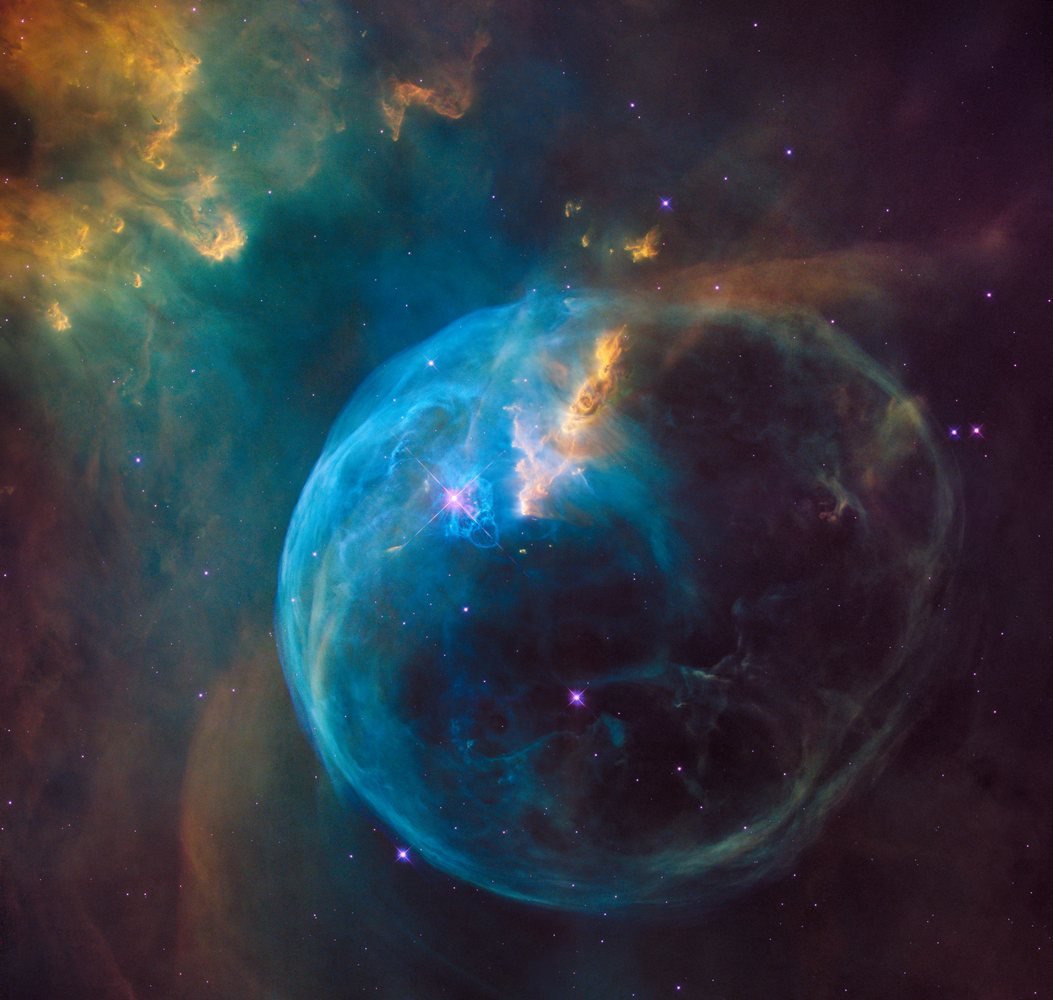
Featured image: Unsplash (free license) — deep-space galaxy field used as illustrative astronomy imagery.