










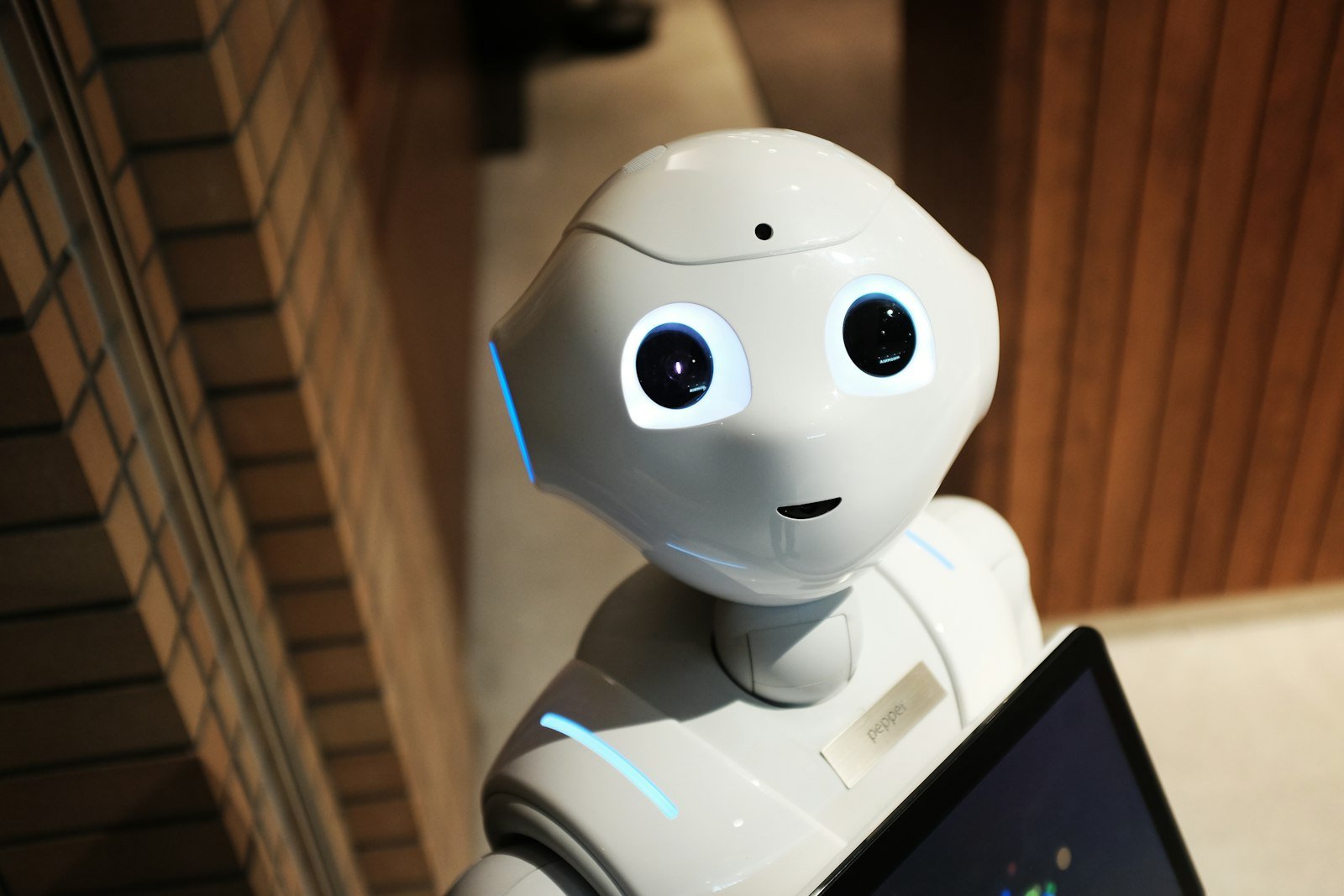
China’s commerce ministry threatened concrete countermeasures on July 30, 2026, escalating the China humanoid robot retaliation dispute after the US Federal Communications Commission added foreign-made advanced robotic devices, including humanoids, to its restricted import list two days earlier. The exchange is not primarily about the robots themselves; it is a fast-moving trade and diplomacy flashpoint arriving weeks before a planned September meeting between President Trump and President Xi Jinping. This piece focuses on the retaliation angle and what it signals for US-China tech relations, not on the mechanics of the FCC ban itself.
According to CNBC, China’s commerce ministry said in an online statement that the FCC “has repeatedly ignored Beijing’s restrained stance on product bans” and that continued escalation “severely damages China-US economic and trade stability.” The ministry formally urged Washington to withdraw the measure and said it would take unspecified retaliatory action if the US does not comply.
Why China humanoid robot retaliation is escalating now
The FCC’s Tuesday action, confirmed by TechCrunch and other outlets, added foreign-produced advanced robotic devices and power inverters to the FCC’s Covered List on national-security and cybersecurity grounds, citing risks that such devices could be remotely controlled, used for surveillance, or exploited in cyberattacks. The rule blocks new equipment authorizations for future models rather than recalling devices already sold, but it effectively closes the US market to new Chinese humanoid launches. Because China’s manufacturers dominate global humanoid shipments, Beijing reads the move as targeted, even though the FCC notice does not name a specific country.
China’s Ministry of Commerce called the underlying justification a case of the US “generalizing the concept of national security” to engage in what it labelled market distortion and unilateral bullying, according to CNBC’s translation of the ministry’s Mandarin-language statement and coverage from the Economic Times. Beijing said it would “resolutely retaliate” if Washington presses ahead, though it has not yet detailed specific countermeasures such as tariffs, export controls, or restrictions on American firms operating in China.
Who actually loses market access
Counterpoint Research data reported by industry outlets shows just how concentrated the affected market is. Chinese firm Agibot led global humanoid robot installations in 2025 with roughly 31% share, followed by Unitree at about 27% and UBTech at just over 5%, together with Leju Robotics also near 5%. Tesla’s Optimus program ranked fifth, with roughly 5% share as it scaled Gen 2 and Gen 2.5 production. The top five suppliers together accounted for about 73% of installations, and Chinese makers represented the large majority of that total.
| Rank | Manufacturer | Country | Approx. 2025 share |
|---|---|---|---|
| 1 | Agibot | China | ~31% |
| 2 | Unitree Robotics | China | ~27% |
| 3 | UBTech | China | ~5%+ |
| 4 | Leju Robotics | China | ~5% |
| 5 | Tesla (Optimus) | United States | ~5% |
The China humanoid robot retaliation story has an immediate market signal: Hong Kong-listed UBTech shares fell more than 6% after the FCC announcement, reflecting investor concern that a company reliant on industrial humanoid exports could lose access to future US authorizations for new models, even though its currently authorized robots remain legally saleable in the US under the FCC’s own framework.
The wider AI and trade backdrop
This dispute is unfolding alongside separate but related friction over AI policy. US Treasury Secretary Scott Bessent has raised the possibility of sanctioning China over alleged AI model “theft,” a comment that adds another layer of tension ahead of the Trump-Xi meeting. At the same time, Trump has publicly signalled a more cautious approach to broader AI export and technology controls, suggesting the administration is trying to balance robotics and chip restrictions against a desire to keep negotiating room open with Beijing before the September summit.
That mixed signalling matters for how seriously markets should take China’s retaliation threat. Beijing has, in the past, paired strong rhetoric with calibrated responses rather than immediate broad retaliation, especially when a leader-level meeting is imminent. Whether this case follows that pattern, or whether China moves faster given the specific timing so close to Trump-Xi talks, remains to be seen.
For American robotics firms, the dispute also cuts two ways. A narrower Chinese import channel could, in theory, create room for US-based manufacturers such as Figure AI, Agility Robotics, and Tesla to gain domestic market share without direct competition from the cheapest Chinese models. But those same US firms often depend on Chinese-made components, motors, and batteries, so a tit-for-tat trade escalation could raise their own costs even as it restricts their competitors’ market access. That interdependence is a large part of why analysts describe this as a delicate moment rather than a simple win for either side’s robotics industry.
What the evidence does and does not show
The evidence clearly shows a formal Chinese government objection, a threat of retaliation, and a market reaction in UBTech shares. It does not yet show what specific retaliatory measures China will take, whether the FCC will grant conditional approvals to soften the impact on any individual company, or whether the dispute will be resolved or worsened at the September Trump-Xi meeting. Reports naming affected companies rely on market-share data and analyst commentary rather than an explicit FCC country designation, since the agency’s notice describes “foreign-produced” devices generically.
Limitations and uncertainties
This explainer draws on statements from China’s commerce ministry as reported by CNBC and the Economic Times, alongside FCC-related reporting from TechCrunch. China’s precise retaliatory tools, timeline, and scope have not been disclosed publicly as of July 30, 2026. Market-share figures for Agibot, Unitree, UBTech, and Tesla are drawn from Counterpoint Research estimates cited in trade press and may be revised as 2026 shipment data is finalized.
Reader FAQ
What exactly is China retaliating against?
China is objecting to the FCC’s July 28, 2026 decision adding foreign-made advanced robotic devices and power inverters to its restricted import list, which China’s commerce ministry says unfairly targets Chinese manufacturers.
Has China announced specific retaliatory measures?
Not yet, based on reporting reviewed for this article. The commerce ministry has threatened “resolute” countermeasures and urged the US to withdraw the rule, but has not detailed tariffs or other specific actions.
Does the FCC rule ban robots Americans already own?
No. The rule applies to new equipment authorizations for future models; it does not revoke previously authorized devices already sold or in use, according to FCC statements reported by TechCrunch and other outlets.
Why does the timing matter?
The dispute is unfolding weeks before a planned September meeting between President Trump and President Xi Jinping, raising the stakes for whether this becomes a broader trade flashpoint or a contained regulatory disagreement.
Bottom line: The China humanoid robot retaliation threat is a diplomatic and market signal as much as a trade dispute, arriving just as Chinese firms dominate global humanoid shipments and just before a high-stakes Trump-Xi summit. UBTech’s share drop shows investors are already pricing in risk, but China’s actual retaliatory steps, and Washington’s willingness to grant exemptions, remain the open questions to watch.
Primary sources
- China threatens retaliation against U.S. humanoid robot ban — CNBC
- China warns of retaliation over US curbs on robots, inverters — The Economic Times
- US government bans new foreign-made humanoids, robot dogs, and solar inverters — TechCrunch
- Humanoid robot market share data — Gizmochina (Counterpoint Research)
Related Topic Express coverage
Featured image: Photo via Unsplash (photo-1485827404703-89b55fcc595e); free to use under the Unsplash License. Illustrative only.