









Dharmendra Pradhan Resigns as Education Minister is the core development covered in this report. Below is a sourced breakdown of what is confirmed, what remains uncertain, and why it matters.
Why Dharmendra Pradhan Resigns as Education Minister matters now
This section focuses on the practical implications of Dharmendra Pradhan Resigns as Education Minister for readers following the story — what changed, what is confirmed, and what remains open.
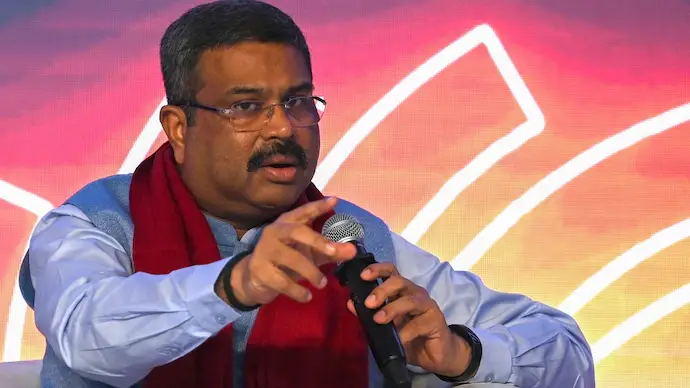
New Delhi | Updated July 29, 2026 — Union Education Minister Dharmendra Pradhan resigned from the Union Council of Ministers on Saturday, July 25, 2026, after weeks of student-led protests over the NEET-UG 2026 paper-leak controversy. Later the same day, President Droupadi Murmu accepted the resignation with immediate effect under clause (2) of Article 75 of the Constitution, on the advice of Prime Minister Narendra Modi, and assigned additional charge of the Ministry of Education to Cabinet Minister Pralhad Joshi.
The sequence is now documented across Pradhan’s public resignation letter, a Rashtrapati Bhavan communique reported by multiple national outlets, coverage by DD News, and a Press Information Bureau note that Joshi formally took charge of the Education Ministry on July 26, 2026.
What happened on July 25
Pradhan announced that he had submitted his resignation to the Prime Minister and released a detailed letter on X. He said irregularities in the NEET-UG examination held on May 3, 2026, had come to light; that the government handed the matter to the Central Bureau of Investigation (CBI), cancelled the exam, and announced a re-test; and that the re-examination was completed on June 21, 2026.
Explaining why he was stepping down, Pradhan wrote that events of the preceding days had saddened him, that the matter was “not about my personal reputation,” and that he wanted to prevent the situation at Jantar Mantar and elsewhere from being exploited, keep national unity intact, and ensure students were not drawn into legal complications. He also reiterated that, from the first day, he had taken responsibility for the crisis and said the government had decided that NEET would move to computer-based testing from the following year.
In the evening, the President’s office communicated acceptance of the resignation and Joshi’s additional Education portfolio. On July 26, Joshi assumed charge at Kartavya Bhavan and held a review meeting with senior ministry officials, according to the Press Information Bureau.
Key facts
- Resignation date: July 25, 2026
- Acceptance: President Murmu accepted under Article 75(2) the same day
- Successor: Pralhad Joshi given additional charge; assumed charge July 26, 2026
- Trigger: NEET-UG 2026 paper-leak controversy and student protests
- Exam timeline: May 3 exam cancelled May 12; re-test June 21, 2026
How the NEET-UG 2026 crisis unfolded
NEET-UG 2026, India’s national medical entrance test, was conducted on May 3, 2026, with more than 22 lakh candidates appearing, according to national reporting. On May 12, the National Testing Agency (NTA), with Government of India approval, cancelled the May 3 examination after inputs from central agencies and law-enforcement findings indicated the process could not be allowed to stand. The matter was referred to the CBI.
NTA said existing registrations and centre preferences would carry forward, that no fresh registration or additional fee would be required, and that previously paid fees would be refunded. A re-examination was later scheduled for June 21, 2026. Pradhan’s resignation letter stated that results of the re-test were announced on July 16, 2026.
The cancellation and subsequent investigation turned a single high-stakes exam into a wider dispute over examination integrity, institutional accountability, and the human cost borne by aspirants and families.
Protests, CJP, and political pressure
From mid-May, public anger over the leak and cancellation fed a youth-led campaign associated with the Cockroach Janta Party (CJP), founded by Abhijeet Dipke. Street protests demanding Pradhan’s resignation and examination reforms were reported from early June. On June 20, CJP began an indefinite sit-in at Jantar Mantar in New Delhi. That sit-in continued for about 36 days until July 25, The Hindu reported.
Activist Sonam Wangchuk’s hunger strike at the site added national attention. Opposition parties pressed the issue in Parliament during the Monsoon Session. The Centre held talks with CJP representatives, including rounds involving Union Ministers J. P. Nadda and Jitendra Singh. Protesters treated Pradhan’s resignation as a non-negotiable demand, alongside compensation for families of students who died by suicide after the cancellation, withdrawal of FIRs against peaceful protesters, and broader exam-system reforms.
Reporting across The Hindu, Economic Times, NDTV, Hindustan Times, Moneycontrol, and AFP/France 24 places the resignation squarely in that protest and negotiation context. Government sources cited by The Hindu said the leadership had concluded by July 24 evening that Pradhan’s resignation would be necessary to end an agitation spreading beyond Delhi.
What Pradhan said — and what he did not say
Pradhan did not describe his exit as an admission of personal guilt for the leak itself. He framed it as a decision taken so that students could return to studies and careers, and so that the protest situation would not be used by “anti-national” forces — language he used in the letter.
He credited a “whole-of-government” response after May 3 irregularities became known: CBI investigation, cancellation, re-test on June 21, and a planned shift to CBT mode. Those claims should be read as the minister’s own account; the CBI probe and NTA reforms remain separate processes that will continue under new political leadership.
Protests called off after talks
After Pradhan’s announcement, CJP leaders said they were ending the Jantar Mantar agitation in good faith. At a joint press interaction, Nadda said the government would provide “honourable compensation,” within applicable rules, to families of students who died by suicide after the NEET cancellation, and that FIRs against protesters would be withdrawn. CJP spokespersons said the Centre had accepted their demands and asked supporters to leave peacefully.
CJP had publicly sought ₹1 crore compensation per affected family. Nadda’s formulation was “honourable compensation” under rules. Responsible reporting should keep that distinction clear until a formal compensation order or scheme is published.
Who runs the Education Ministry now
Pralhad Joshi, already holding Consumer Affairs, Food and Public Distribution, and New and Renewable Energy, was given additional charge of Education on July 25 and took charge on July 26. He said he accepted the responsibility with “a sense of duty and humility” and pledged to work under the Prime Minister’s guidance. The change closes Pradhan’s tenure as Education Minister, which began in 2021 and continued after the 2024 Lok Sabha election.
What remains unresolved
Resignation ends one political demand; it does not close the underlying case. Outstanding questions include the CBI investigation’s findings and prosecutions, NTA restructuring and security upgrades, the timeline and design of computer-based NEET, whether compensation commitments are converted into published rules and payments, and how far the Centre engages CJP’s wider reform charter. Opposition leaders, including Rahul Gandhi, called the resignation a significant but incomplete step and sought further accountability for police action against protesters.
As of July 29, 2026, the verified public record is: Pradhan resigned on July 25; the President accepted that resignation the same day; Joshi holds Education; and the NEET-linked student agitation that made resignation a core demand has been formally called off by its organisers after talks with the Centre.
FAQ
Did Dharmendra Pradhan actually resign?
Yes. He tendered his resignation on July 25, 2026. President Murmu accepted it with immediate effect under Article 75(2).
Was the resignation linked to NEET protests?
Yes, as a matter of public record and political sequence. The resignation followed sustained CJP-led protests over the NEET-UG 2026 leak and cancellation; Pradhan’s letter expressly addressed the Jantar Mantar situation; and CJP treated his exit as a central demand before calling off the sit-in.
Who is the Education Minister now?
Pralhad Joshi holds additional charge of the Ministry of Education, alongside his existing portfolios. He assumed charge on July 26, 2026.
What happened to NEET-UG 2026?
The May 3, 2026, exam was cancelled on May 12 after integrity concerns. A re-examination was held on June 21, 2026. A CBI probe into the alleged paper leak continues separately from the ministerial change.
Primary sources
Related reading: Delhi Protests 2026: Why Students Took to the Streets Over NEET
This report is based on Pradhan’s published resignation letter, Rashtrapati Bhavan/DD News accounts of presidential acceptance, PIB reporting on Joshi taking charge, and contemporaneous reporting by The Hindu, Economic Times, NDTV, Hindustan Times, Moneycontrol, and AFP/France 24. It will be updated if official compensation notifications or CBI charge-sheets alter the verified record.
Related Topic Express coverage
- Delhi NEET Protests 2026: What Happened, What Was Confirmed
- Fed Holds Rates July 2026 as Middle East Oil Shock Bites