








The European Space Agency’s Euclid space telescope has found the Euclid most distant quasars ever recorded, part of a haul of 31 newly discovered quasars from the early universe. The two most extreme objects, catalogued as EUCL J172902.75+641018.1 and EUCL J125308.55+705432.3, sit at redshifts of 7.77 and 7.69 respectively, meaning their light left them when the universe was only about 670 million years old, roughly 5% of its current age. The findings, published by Yang et al. in Astronomy & Astrophysics, more than double the number of known quasars at redshift 7 or higher.
According to the European Space Agency and the Euclid Consortium, the new record-holder, EUCL J172902.75+641018.1 at redshift 7.77, surpasses the previous most distant quasar, discovered in 2021 at redshift 7.64, by about 15 million years further back in cosmic history. Both new record objects lie just over 13 billion light-years away and were shining with the light of a trillion suns, according to ESA’s description, while the universe was still in its infancy.
The Euclid most distant quasars: how they were found
The discoveries come from roughly 3,000 square degrees of sky, about 7% of the entire celestial sphere, covered during the first one and a half years of the Euclid Wide Survey. Researchers used machine-learning and probabilistic selection techniques on Euclid’s imaging data, then confirmed candidates with spectroscopic follow-up observations using the Keck, Magellan, and Large Binocular Telescope facilities on the ground. Of the 123 high-redshift candidates followed up, 31 were confirmed as genuine quasars in the redshift range 6.6 to 7.8, according to the peer-reviewed paper published in Astronomy & Astrophysics.
Twelve of the 31 newly confirmed quasars sit at redshift 7 or above, more than doubling the roughly nine quasars previously known at that distance since the first such object was confirmed in 2011. That jump matters because quasars this early in cosmic history are rare and hard to find; each confirmed detection adds meaningfully to a very small existing sample, unlike more common astronomical objects where a similar-sized discovery would be a comparatively minor addition.
Why the most distant quasars matter for cosmology
Quasars are powered by supermassive black holes actively feeding on surrounding gas and dust, and finding them at redshift 7 and beyond poses a genuine puzzle: how did black holes with masses of a billion suns or more grow so large so quickly, when the universe was less than 700 million years old? The Euclid most distant quasars discovery gives astronomers new data points to test theories of early black hole formation and growth, and to study the epoch of reionisation, the period when radiation from the first galaxies and quasars stripped electrons from hydrogen atoms and made the universe transparent to light.
Jinyi Yang of the University of Michigan, the study’s lead author, described the finds as offering “invaluable insights into how the cosmos emerged from darkness and how the earliest supermassive black holes formed,” according to the Euclid Consortium’s press release. A companion follow-up paper, led by Silvia Belladitta, reported that the second most distant of the new quasars appears to be embedded in a dusty, gas-filled galaxy that is rapidly forming new stars, offering an early look at what a host galaxy around one of these ancient black holes might look like.
Comparison: this discovery versus the prior state of the field
| Metric | Before this Euclid result | After this Euclid result |
|---|---|---|
| Known quasars at z >= 7 | About nine, since the first was found in 2011 | 21, after 12 new confirmations, more than doubling the count |
| Most distant quasar redshift | 7.64 (discovered 2021) | 7.77 (EUCL J172902.75+641018.1) |
| Sky area surveyed for this search | N/A (prior surveys used different footprints) | ~3,000 square degrees from 1.5 years of Euclid Wide Survey data |
| Universe age at detection | ~680 million years for the prior record | ~670 million years for the new record, about 5% of current age |
| Follow-up method | Varied by survey | Keck, Magellan, and Large Binocular Telescope spectroscopy |
What the evidence does not yet show
This is an early-survey result: the paper covers only the first one and a half years of data from a mission designed to run for six years total. ESA and the Euclid Consortium both describe this as a beginning rather than a complete census, and they expect hundreds more high-redshift quasars, potentially including the first confirmed examples beyond redshift 8, as the full survey proceeds. The current sample is also selective, built from candidates bright enough and distinctive enough to be flagged by the search algorithms and then confirmed by ground-based spectroscopy, so it should not be read as a complete inventory of quasars at these distances.
Limitations and uncertainties
Redshift measurements and the derived universe-age estimates depend on standard cosmological models; ESA cites approximately 670 million years for the new record-holder, while some independent summaries of the same paper cite figures closer to 662 million years, reflecting minor differences in rounding and calculation method rather than a factual dispute. The full physical characterization of the host galaxies, including precise black hole mass estimates, will require the additional multi-wavelength follow-up observations that the Euclid Consortium says are already underway or planned.
Reader FAQ
What makes these the Euclid most distant quasars ever found?
EUCL J172902.75+641018.1, at redshift 7.77, and EUCL J125308.55+705432.3, at redshift 7.69, are the two most distant of 31 newly confirmed quasars, with the first setting a new all-time record for the most distant quasar known.
How old was the universe when this light was emitted?
According to ESA, the new record-holder’s light was emitted when the universe was about 670 million years old, roughly 5% of its current age of about 13.8 billion years.
Why is finding quasars this early in the universe significant?
It helps astronomers understand how supermassive black holes grew so massive so quickly after the Big Bang, and provides data on the epoch of reionisation when the early universe became transparent to light.
Is this the final word on early quasars from Euclid?
No. This result covers only the first 1.5 years of a planned six-year survey, and the Euclid Consortium expects hundreds more high-redshift quasar discoveries as the mission continues.
Bottom line: The Euclid most distant quasars discovery adds 31 new early-universe quasars to the astronomical record, including a new all-time distance record at redshift 7.77, from just the first slice of a six-year survey. The result more than doubles the known population of the earliest quasars and gives researchers fresh evidence to probe how the first supermassive black holes formed, even as the full picture will take years more data to complete.
Primary sources
Related Topic Express coverage
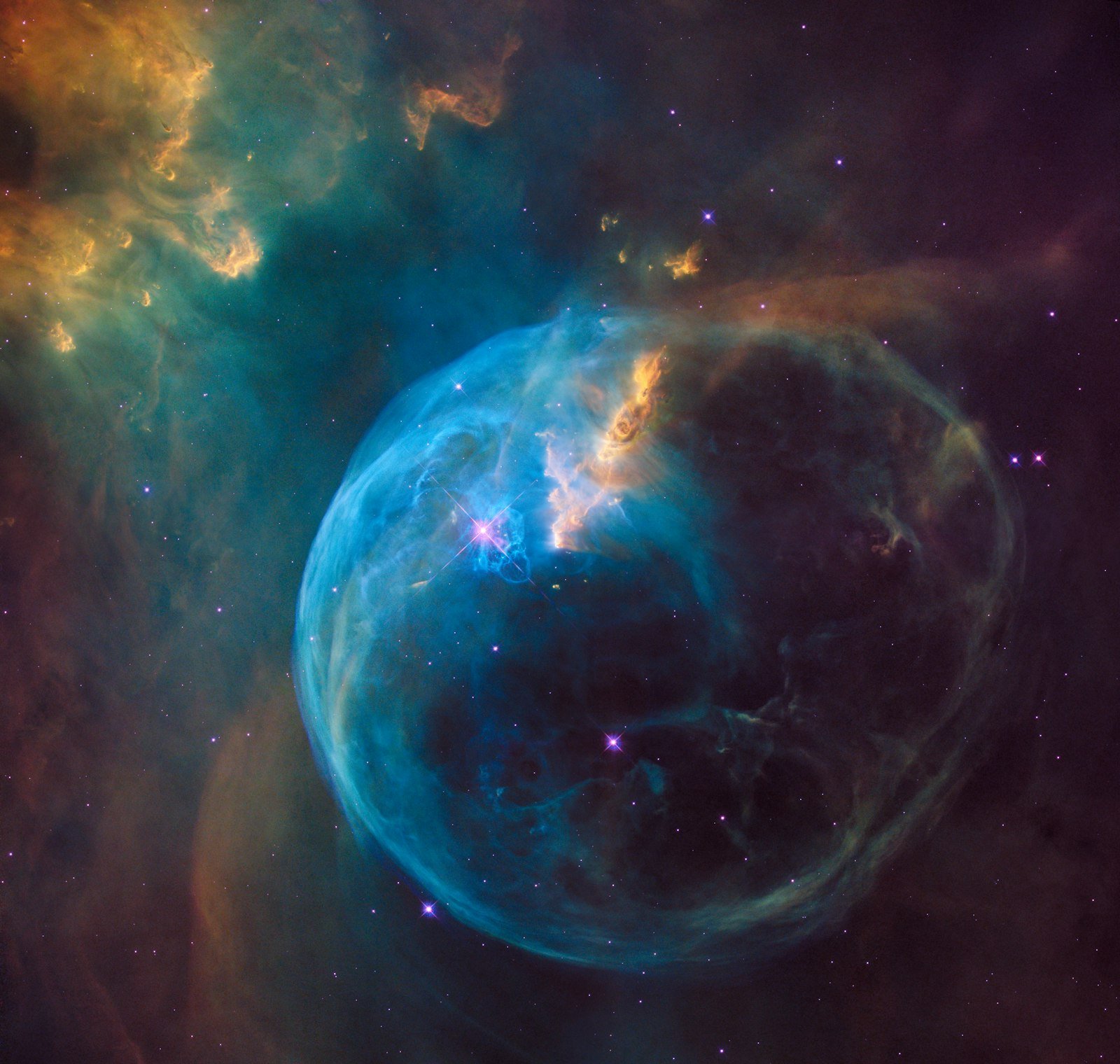
Featured image: Photo via Unsplash (photo-1462331940025-496dfbfc7564); free to use under the Unsplash License. Illustrative only.