










Fed Decision July 2026 Why Markets is the core development covered in this report. Below is a sourced breakdown of what is confirmed, what remains uncertain, and why it matters.
Why Fed Decision July 2026 Why Markets matters now
This section focuses on the practical implications of Fed Decision July 2026 Why Markets for readers following the story — what changed, what is confirmed, and what remains open.
Editor’s note (July 29, 2026): This article is framed around the Federal Reserve’s published meeting calendar and widely reported market expectations ahead of and around the July 28–29, 2026 FOMC meeting. Where the final policy-statement wording is not yet confirmed in primary Fed materials at research time, we label projections clearly and point readers to federalreserve.gov for the official statement, implementation note, and Chair’s press conference.
The Federal Open Market Committee is scheduled to meet July 28–29, 2026, with the policy decision customarily released at 2:00 p.m. Eastern Time on the second day and the Chair’s press conference at 2:30 p.m. ET. The Fed’s public calendar, last updated July 8, 2026, lists July among the 2026 meetings that are not paired with a Summary of Economic Projections (no asterisk)—so markets should not expect a fresh “dot plot” at this meeting. Projection meetings in 2026 are March, June, September, and December.
What the official calendar tells us
Primary documentation lives on the Federal Reserve Board’s FOMC calendars page. For 2026 it sequences January 27–28; March 17–18 (projections); April 28–29; June 16–17 (projections); July 28–29; September 15–16 (projections); October 27–28; and December 8–9 (projections). Minutes of regularly scheduled meetings are released about three weeks after the decision; June 16–17 minutes were released July 8, 2026.
The Board’s July 2026 events calendar similarly flags the two-day FOMC meeting and the standard 2:00 p.m. statement window. Those scheduling facts are not forecasts—they are the institutional timetable traders and journalists use to structure coverage.
Why a hold was the base-case expectation
Expectation, not confirmed decision: Into decision day, market pricing and secondary calendar briefings widely treated a hold in the federal funds target range as the modal outcome, after the Committee had already held in prior 2026 meetings while inflation remained above the longer-run 2% PCE objective. Briefings citing a recent target range near 3.50%–3.75% should be checked against the Fed’s own latest statement and implementation note—those documents are authoritative.
Several structural reasons explain why a hold dominated pre-meeting narratives:
- No new SEP in July. Without updated dots, the statement’s adjectives and the Chair’s Q&A carry extra weight; committees often prefer continuity between projection meetings unless data force a change.
- Data dependence between June and July. The inter-meeting slate typically includes labor-market prints, retail sales, and inflation readings. A hold expectation usually means markets saw those prints as insufficiently one-sided to compel an immediate cut or hike.
- Communication risk. After any meeting that showed unusual dissent earlier in the year (as some secondary reports alleged for spring 2026), investors focus as much on vote tallies and guidance language as on the rate level itself.
None of that substitutes for reading the actual July 29 statement. If the Committee cut, hiked, or altered balance-sheet language, the Fed site is the source of truth.
What to watch in the statement and press conference
Whether or not the target range is unchanged, markets typically parse five elements:
- The rate decision and any dissent. A unanimous hold lands differently than a hold with multiple dissents toward ease or tightness.
- Inflation and employment balance. Watch whether risks are described as two-sided, skewed, or evolving.
- Forward guidance tone. Phrases about “further” adjustments, patience, or readiness to respond can move futures even when the target range is static.
- Balance-sheet and reserves language. Technical paragraphs sometimes matter for money markets more than headlines admit.
- The Chair’s press conference. Live answers on labor cooling, services inflation, and financial conditions often reprice the path to September’s projection meeting.
What comes next on the Fed calendar
After July, the next scheduled gatherings are September 15–16, 2026 (with SEP and dots), October 27–28, and December 8–9 (SEP). September is the next major waypoint for revised growth, unemployment, inflation, and funds-rate projections. July’s role, in a hold-expectation framework, is often to bridge June’s forecasts and September’s update without surprising markets—unless incoming data demand otherwise.
Investors should also diary the release of July meeting minutes (~three weeks later) for a fuller map of internal debate. Unscheduled meetings remain possible; the Fed’s calendar notes that each date is tentative until confirmed at the preceding meeting.
How households and businesses should use this coverage
Rate decisions influence mortgage quotes, credit-card APRs, auto loans, and business borrowing costs with lags. A widely expected hold, if confirmed, usually means financing conditions evolve more through risk premia and longer-term yields than through an overnight-policy surprise. Conversely, an unexpected cut or hike can jolt equities, the dollar, and front-end rates within minutes of the 2:00 p.m. release.
This is not investment advice. Readers should verify the final decision on federalreserve.gov and consider personal financial circumstances or licensed advice before acting on market moves.
Market plumbing around a non-SEP meeting
Non-projection FOMC meetings often become exercises in parsing adjectives. Without a dot plot, federal funds futures and Treasury yields react to shifts such as “somewhat elevated” inflation language, employment “cooling” versus “solid,” or any change in the Committee’s description of the balance of risks. Equity and currency desks watch the same text for clues about whether September’s SEP is more likely to validate a hold path or reopen cut discussions.
Expectation framing: Pre-decision commentary that “markets expect a hold” typically rests on interest-rate futures implied probabilities and dealer surveys. Those tools can be wrong. Unexpected data revisions, geopolitical shocks, or financial-stability concerns can flip a base case within days. That is why this article anchors on the Fed’s calendar and urges readers to refresh the official statement rather than treat secondary briefs as final.
Historically, July meetings can still matter enormously when they change the funds rate or guidance; they can also be quiet waypoints. Either outcome is policy-relevant. A confirmed hold with hawkish press-conference answers can tighten financial conditions; a hold with dovish answers can ease them. The rate level and the reaction function are separate stories.
Businesses budgeting for capital expenditure and households refinancing debt should map scenarios: unchanged policy through September; a cut at a later meeting if inflation cools further; or a longer pause if price pressures re-accelerate. Scenario planning beats binary “will they/won’t they” takes. Official Fed materials—statements, minutes, SEP tables when available, and speeches by governors and presidents—remain the primary corpus for interpreting the reaction function.
Finally, remember operational details: the New York Fed’s implementation note translates the target range into administered rates such as IORB and ON RRP parameters. Market technicians read those lines as carefully as the macro paragraph. After the July 29 release window, confirm both the policy statement and the implementation note on federalreserve.gov before drawing firm conclusions about overnight funding conditions.
FAQ
When is the July 2026 Fed decision announced?
On the Fed’s standard timetable: statement at 2:00 p.m. ET on Wednesday, July 29, 2026, after the July 28–29 meeting, followed by the Chair’s press conference at 2:30 p.m. ET.
Will there be a dot plot in July?
No. July 2026 is not marked as a Summary of Economic Projections meeting on the Fed calendar. The next SEP-associated meeting is September 15–16, 2026.
Is a hold confirmed?
Only the FOMC’s published statement confirms the decision. Pre-meeting coverage describing a hold reflects expectations and should be labeled as such until primary materials are posted.
Primary sources
- Federal Reserve: FOMC meeting calendars and information (2026 schedule; last update noted July 8, 2026)
- Federal Reserve Board calendar: July 2026
- Official FOMC statement, implementation note, and press-conference materials posted on decision day (check the calendars page for live links)
Related coverage
Pair this explainer with the June 16–17, 2026 projection materials and the July 8 minutes release for the Committee’s last full forecast set, then watch September’s SEP for the next formal update to the rate path. Labor-market and PCE inflation releases between meetings remain the data bridges markets use to revise hold-versus-cut odds.
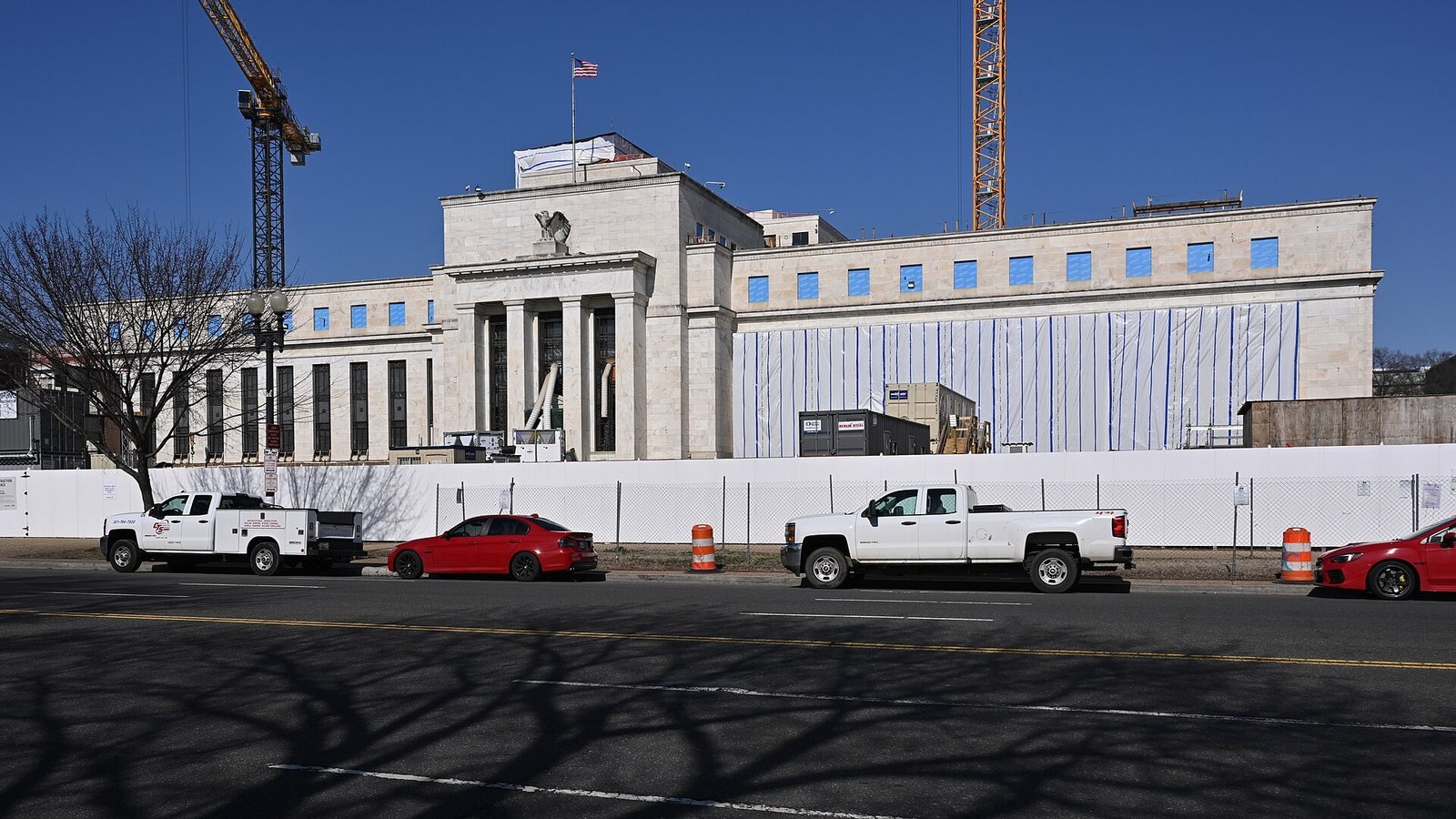
Image: Photo: G. Edward Johnson via Wikimedia Commons (CC BY 4.0)
Related reading: U.S. Strategic Petroleum Reserve Hits Lowest Level Since 1983
Related Topic Express coverage
- Fed Holds Rates July 2026 as Middle East Oil Shock Bites
- El Niño Is Strengthening: Why Ocean Heat Records Matter in 2026