










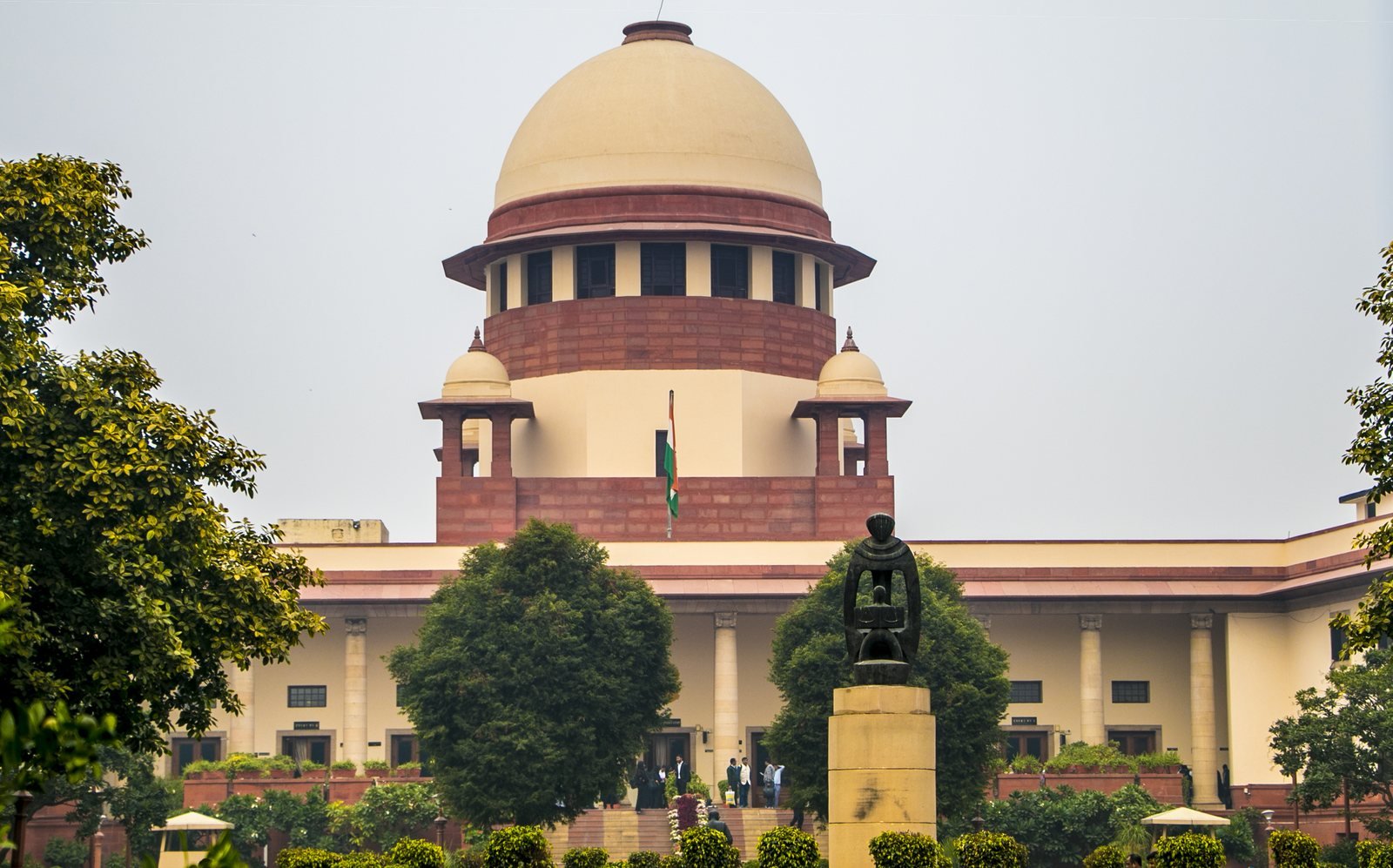
On 29 July 2026, a Supreme Court Bench led by Chief Justice of India Surya Kant, with Justices Joymalya Bagchi and Vipul Pancholi, quashed the Union government’s 2021 Office Memorandum (OM) that created an administrative route for ex post facto environmental clearances (ECs). The judgment in the Vanashakti review chain holds that the Centre may still craft limited amnesty windows—but only through a valid statutory notification under Section 3 of the Environment (Protection) Act, 1986, not through an office memorandum.
Why ex post facto environmental clearance matters now
This section focuses on the practical implications of ex post facto environmental clearance for readers following the story — what changed, what is confirmed, and what remains open.
What the Court decided
The Environment Impact Assessment (EIA) Notification, 2006—issued as delegated legislation—makes prior environmental clearance mandatory for listed projects before construction or operations begin. Highways, airports, real estate and township developments, ports, mining, energy and heavy industry typically fall within that prior-EC frame.
Justice Bagchi, authoring the judgment, described the 2021 OM as an administrative order that envisaged a perpetual regime for granting ECs to projects that had already started without prior clearance. The Court held that the OM substantially altered the enquiry and criteria under the 2006 Notification and thereby “supplants an earlier delegated legislation through an administrative order, which is impermissible in law.”
The Bench further held that the OM, as a perpetual amnesty scheme for all permissible projects, failed to lay down an intelligible differentia linked to supervening public interest. It was found ultra vires the Environment (Protection) Act’s balance between the precautionary principle and sustainable development, and violative of Articles 14 and 21. The OM was therefore quashed prospectively.
Exact legal frame, in plain language
- Section 3, Environment (Protection) Act, 1986: Empowers the Central Government to take measures to protect and improve the environment, including by notification. Amending the prior-EC rule must travel this statutory notification route.
- EIA Notification, 2006: Delegated legislation requiring prior EC for covered projects. It cannot be rewritten by an office memorandum.
- 2017 notification: Upheld as a narrowly tailored, time-bound amnesty instrument traceable to Section 3 (read with Section 21 of the General Clauses Act).
- 2021 OM: Quashed prospectively as an impermissible administrative substitute for amending the 2006 regime.
- Article 142: The Court clarified that its ruling does not prevent the Supreme Court itself from granting ex post facto clearance in an appropriate case under its plenary powers.
Before vs after
| Issue | Before 29 July 2026 ruling | After the ruling |
|---|---|---|
| Route for post-facto EC | 2021 OM offered an ongoing administrative protocol for projects that started without prior EC | OM route closed; future post-facto windows need a valid Section 3 notification |
| Status of 2017 one-time amnesty notification | Contested across successive Vanashakti rounds | Upheld as valid, narrowly tailored delegated legislation |
| Already granted clearances under 2017 / 2021 instruments | Operational for beneficiaries | Remain valid unless individually challenged in accordance with law |
| Fresh applications under 2017 notification or 2021 OM | Could still be pursued under the OM framework | No further applications under either instrument to be entertained |
| Centre’s future administrative OMs for post-facto EC | Used as a standing workaround | Restrained, save for a valid Section 3 notification |
Implementation questions
- Pending OM applications: How will MoEFCC and State Environment Impact Assessment Authorities dispose of files already filed but not granted under the quashed OM?
- Project continuity: For projects with construction underway and no prior EC, what interim compliance or stop-work posture will regulators adopt pending any fresh statutory notification?
- Design of any new amnesty: If the Centre drafts a new Section 3 notification, what public-interest criteria, time limits, and sectoral filters will satisfy the Court’s “narrowly tailored” standard?
- Individual challenges: What limitation periods and forum rules apply when third parties seek to assail ECs already granted under the 2017 notification or 2021 OM?
- Article 142 interface: In what exceptional fact patterns might parties still seek Court-granted post-facto relief without a government notification?
Limitations and what the judgment does not do
The ruling does not hold that ex post facto ECs are forever forbidden. It holds that the method matters: perpetual administrative OMs that rewrite the 2006 Notification are impermissible; carefully framed statutory notifications remain open. Prospective quashing also means the Court deliberately avoided automatic cancellation of past clearances—those survive unless separately attacked. The judgment also does not rewrite sectoral EC thresholds in the 2006 schedule; it polices the process for creating exceptions. Infrastructure lenders and municipal bodies should therefore treat existing OM-based clearances as intact for day-to-day operations unless a specific challenge succeeds, while treating new filings under the OM as closed.
Context: three rounds of Vanashakti litigation
The July 2026 outcome sits atop a contested sequence. In May 2025, a Division Bench treated retrospective clearances as incompatible with prior-EC discipline and quashed both the 2017 notification and the 2021 OM. In November 2025, on review (including industry concerns about stranded public and private projects), a larger Bench diluted that approach, citing the scale of works already underway. Vanashakti’s further challenge produced the 29 July 2026 majority judgment authored by Justice Bagchi: keep statutory, time-bound amnesty possible; reject a perpetual OM that rewrites the 2006 Notification; protect past grants unless individually assailed; and stop fresh filings under the quashed OM pathway.
For practitioners, the practical teaching is institutional: when Parliament or the executive uses delegated legislation to set environmental thresholds, later “clarifications” that invent a standing post-facto doorway must match the legal form of that legislation. Administrative convenience is not a substitute for Section 3 process, public-interest tailoring, or constitutional proportionality review under Articles 14 and 21.
FAQ
Does every project without prior EC become illegal overnight?
No. Clearances already granted under the 2017 notification or 2021 OM stay valid unless individually challenged. The immediate change is to the pipeline for new post-facto grants via the OM.
Can the Centre still announce an amnesty?
Yes, in principle—through a valid amending notification under Section 3 of the 1986 Act, tailored to supervening public interest, not through another standing OM.
What about the November 2025 review that revived retrospective ECs?
This July 2026 judgment is the latest calibration: it keeps space for statutory amnesty (and upholds 2017) while striking down the 2021 OM’s perpetual administrative design.
Who should monitor next steps?
Project proponents, lenders, municipal and industrial regulators, and environmental litigants should watch MoEFCC gazette notifications and any project-specific challenges.
Does the judgment freeze highways or airports mid-build?
Not automatically. The Court chose prospective effect precisely to avoid a blanket upheaval of clearances already issued under the contested instruments. Project-specific risk rises only if a particular clearance is separately challenged and set aside.
Primary sources
Disclaimer: This explainer summarises publicly reported court holdings as of 29 July 2026. It is not legal advice. Always verify against the certified judgment text and any subsequent gazette notifications.
Related Topic Express coverage
Featured image: Wikimedia Commons / Pinakpani (CC BY-SA 4.0)