










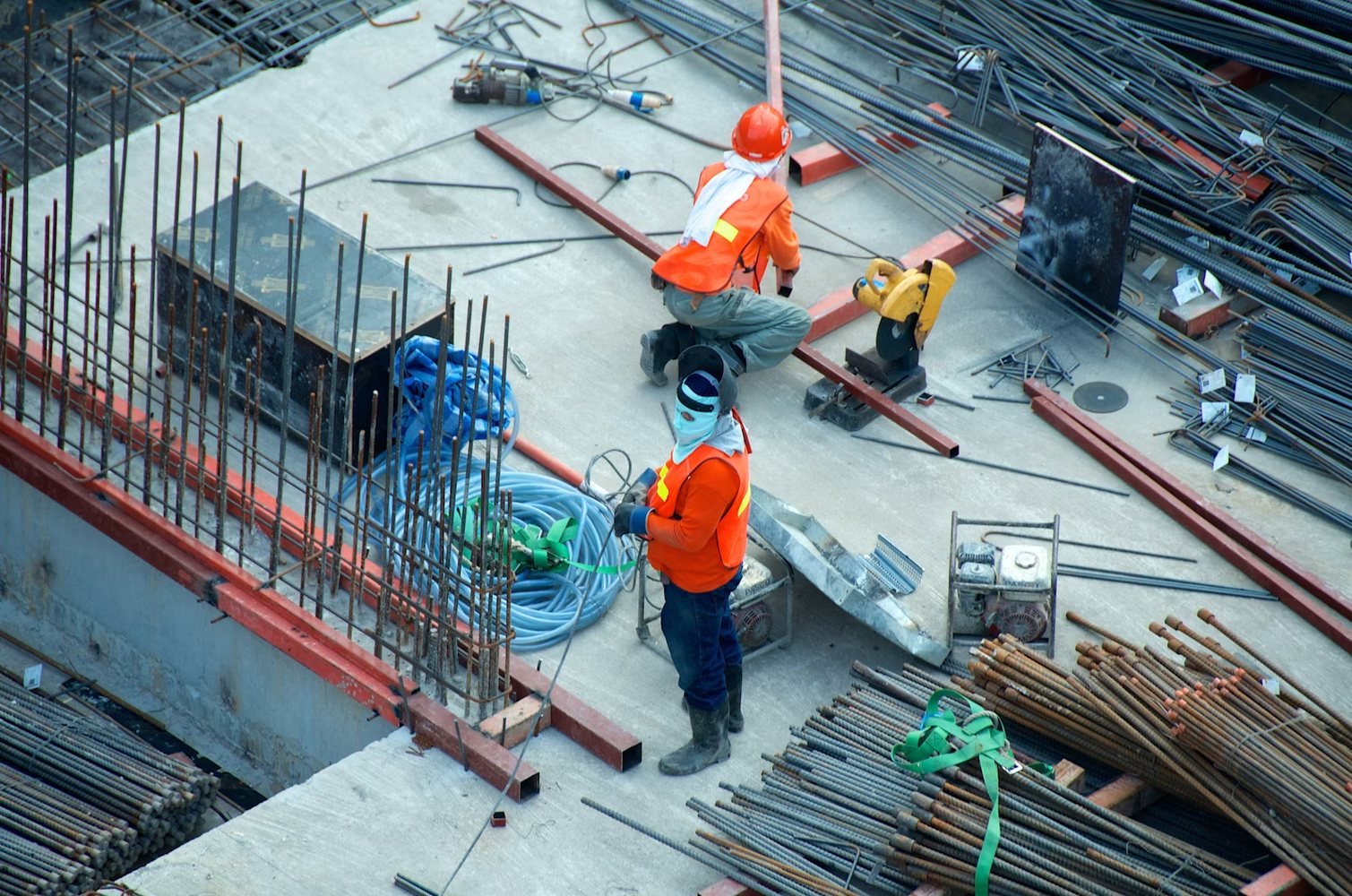
Meta BlackRock data center is the core development covered in this report. Below is a sourced breakdown of what is confirmed, what remains uncertain, and why it matters.
Why Meta BlackRock data center matters now
This section focuses on the practical implications of Meta BlackRock data center for readers following the story — what changed, what is confirmed, and what remains open.
On July 28, 2026, Meta Platforms and BlackRock announced a venture to develop and own a data center campus in El Paso, Texas. The project is already under construction, is designed for 1 gigawatt of compute capacity, and is expected to begin bringing capacity online in 2028. Meta will be the initial sole occupant.
The deal is one of the clearest recent examples of AI platforms shifting from purely on-balance-sheet buildouts to structured capital partnerships. Funds managed by BlackRock will own 80% of the venture; Meta will retain 20%. The parties committed to fund their pro rata share of approximately $14 billion in total development costs for buildings and long-lived power, cooling, and connectivity infrastructure.
Deal mechanics in plain language
At financial close, Meta will contribute land and construction-in-progress assets valued at about $2.3 billion, while BlackRock will contribute roughly $4.9 billion in cash. Meta will receive a one-time distribution of about $1 billion to align the 80/20 ownership split. A portion of BlackRock’s investment is to be funded with proceeds from a $12.5 billion debt financing.
Meta will lease the entire campus from the venture. Leases have a four-year initial term with four extension options, creating potential flexibility over a 20-year horizon. Meta will also provide residual value guarantees (RVG) with an aggregate threshold of approximately $13 billion that decreases over time. Under stated conditions in the first 16 years, Meta’s maximum RVG payment would equal any shortfall between fair value and the then-applicable RVG threshold.
Operationally, Meta will provide construction management, administrative, and property-management services. The press release links the campus to Meta Compute’s strategy of pairing Meta’s infrastructure expertise with capital partners to deliver speed and flexibility for long-term AI ambitions.
Local economic and workforce claims
Meta says the El Paso data center represents an investment of over $10 billion from Meta, supporting more than 4,000 construction jobs at peak and 300 operational jobs when complete, with more than 2,300 workers already onsite. The site participates in America’s Workforce Academy, and Meta cites a $500,000 grant to El Paso public schools for STEM and skilled-trades pathways. BlackRock Foundation’s Future Builders program is separately described as a nearly $30 million investment expected to train more than 12,000 electricians over three years in support of Texas infrastructure demand.
These community commitments are material to permitting and local politics, but they are not substitutes for power, water, and transmission constraints that ultimately gate 1 GW campuses. Meta also says it will continue partnering with local nonprofits on water restoration projects.
Comparison: JV financing vs. traditional hyperscale build
| Dimension | Meta–BlackRock El Paso venture | Traditional fully owned hyperscale build |
|---|---|---|
| Ownership | BlackRock funds 80% / Meta 20% | Operator typically owns 100% of campus assets |
| Upfront capital | Large partner cash in + Meta asset contribution + debt package | Mostly operator cash flow, bonds, or corporate debt |
| Occupancy | Meta initial sole tenant via leases | Owner-operator uses capacity directly |
| Risk sharing | Residual value guarantees and lease structure allocate residual asset risk | Residual asset risk sits primarily on operator balance sheet |
| Speed thesis | Meta cites capital partnerships for speed/flexibility at Meta Compute scale | Speed depends on internal capital allocation cycles |
| Transparency | Detailed PR economics ($14B development, $12.5B debt, RVG ~$13B) | Often less granular project-level financing disclosure |
Privacy and security implications
A 1 GW AI campus concentrates model training and inference workloads—and therefore sensitive research, user-derived training pipelines, and security telemetry—into a strategically important facility. Shared ownership does not mean shared operational control of workloads: Meta remains the initial sole occupant and manager of construction/operations services. Still, complex JV, lender, and contractor ecosystems expand the identity and physical-access surface that must be governed.
Investors and policymakers should also note the energy-security angle. Large AI campuses are critical loads on regional grids. Financing structures that accelerate deployment can outpace local transmission upgrades if not sequenced carefully. Meta’s water-restoration partnerships acknowledge environmental pressure; security planners should similarly plan for insider, supply-chain, and disaster-recovery scenarios at JV sites with multi-party stakeholders.
Limitations and uncertainties
The announcement says the transaction is expected to close in the coming days and capacity online beginning in 2028—timelines that can slip with construction, interconnection, equipment lead times, or financing conditions. The release does not specify chip vendors, rack architectures, or PUE targets. Residual value guarantee mechanics are summarized at a high level; investors should read definitive agreements and future SEC disclosures for precise triggers.
Quoted executive statements from Mark Zuckerberg and Larry Fink in the release reflect each firm’s strategic narrative (superintelligence infrastructure; AI infrastructure as an investment theme). Those quotes are attributed opinions in a corporate press release, not independent performance guarantees.
Reader FAQ
Who owns the El Paso campus?
Upon close of the venture structure described, BlackRock-managed funds would own 80% and Meta 20%, with Meta leasing the campus as initial sole occupant.
How big is the project?
About $14 billion in total development costs for buildings and long-lived power/cooling/connectivity infrastructure, with 1 GW of planned compute capacity.
When does it come online?
The venture expects to begin bringing capacity online in 2028, according to the July 28 announcement.
Is this Meta’s only AI infrastructure strategy?
No. The release positions the venture as part of Meta Compute’s broader approach of combining Meta’s build expertise with capital partnerships; it does not claim exclusivity.
Bottom line: Meta and BlackRock’s July 28 El Paso venture is a publishable, primary-sourced template for financing gigawatt-scale AI infrastructure: 80/20 ownership, ~$14 billion development cost, substantial debt, lease-plus-RVG risk allocation, and a 2028 start-of-capacity target. It is a platforms story as much as a real-estate story—and its security and grid implications will matter as much as the financing engineering.
Primary sources
Related Topic Express coverage
Featured image: Photo by Scott Blake on Unsplash (Unsplash License)